Monday, February 16, 2015

The Five Worst Presidents of All Time

Every year in America, George Washington's birthday is used as an opportunity to close the banks so that we may all take time to honor any and all of the scoundrels who have ever been elected to the highest office in the land. I decided this would be the perfect opportunity to compile a list of the five worst men to ever "serve" in that capacity. Coming up with such a list wasn't easy. The 20th Century alone provided a rogue's gallery of contestants (indeed, 4 out of the 5 on my list hail from the 1900s). But I'm reasonably satisfied with the chiefs I have chosen. Before we go any further, I would like to give special mention to two men who did not make my list: George W. Bush and Barrack Hussein Obama. Each of these men are likely tyrants in their hearts and I do believe they mean harm. But in my opinion they have really under abused the power that has grown in the executive office compared to how the men who did make the list would have abused the same power. God forbid a man like Harry Truman ever comes to office in this day and age. Speaking of Harry...

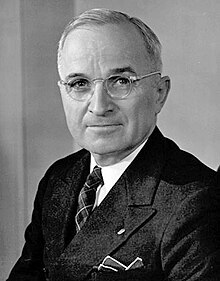
5. Harry S. Truman


Truman's political career really got underway once Kansas City crime lord Tom Pendergast recognized Harry's "talents" and decided that he should be senator. Eventually he was selected as vice president to a man that ranks higher on this list of miscreants, Franklin Delano Roosevelt, and took charge of the federal government after FDR finally gave up the ghost. Truman wrapped up WWII by choosing to become the first (and so far only) person to ever drop atomic weapons on civilians. He killed 129,000 people in those two blasts alone. The Japanese, of course, were already finished at that point. They thought they could force the U.S. to accept a conditional surrender. They underestimated both Truman's cold blooded ways and his desire to display those cold blooded ways to Stalin. He later opted to jettison the Constitution and ushered in a new era where American presidents could choose, with no war declaration, to send troops into "police actions". The "non-war" in Korea resulted in more than 36,000 Americans dead and more than 3 million civilian casualties.

4. Lyndon Baines Johnson
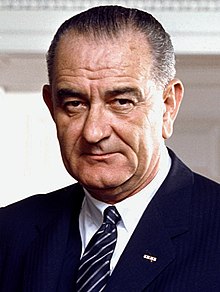

Perhaps we will never know whether or not LBJ truly was the architect of the murder of John Kennedy (or the eight previous deaths of political opponents he has been linked to), but even so his legacy merits his inclusion on this list. Johnson was a sociopath who was, as his biographer Robert Caro put it, "unencumbered by even the slightest excess weight of ideology, of philosophy, of principles, of beliefs". All he cared about was power. Assisted by cronyism, voter fraud, and a vicious demeanor, Johnson finally made his way to the Oval Office.  Once there, he expanded the welfare/warfare state with his "War on Poverty" and his military escalation in Vietnam. He lied to the American people so that he could fight communists in Southeast Asia as he fought for more and more socialism stateside. In short, he dramatically increased the federal government's role at home and abroad. The results have been disastrous.

3. Woodrow Wilson


Woodrow Wilson felt that God had brought him to power in order to make the world a more democratic place. In order to accomplish this divine mission he was going to need a lot of money and a lot of draftees. Aside from bringing the twin evils of The Federal Reserve Act and the Federal Income Tax into existence which have been wreaking havoc on our economy ever since, Wilson led the United States into Europe's Great War in hopes of reshaping the world more to his liking through a league of nations. The entry of the U.S. into the war arguably prolonged the conflict and American support of the British blockade led to Germany signing the Treaty of Versailles which guaranteed an even bloodier sequel to the first world war. Wilson claimed that he didn't support that treaty. But that didn't stop him from what he felt was his obligation to travel to promote it. So the man responsible for the Fed, the income tax, and 116,500 dead American soldiers only comes in at number three. But I truly feel the next two entries have done even more to damage the best ideas of the founding generation.

2. Franklin Delano Roosevelt
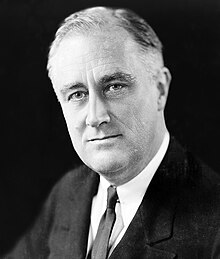

Franklin Roosevelt was perhaps the ultimate charlatan (though he has stiff competition from number one on this list). Entire books have been written about his chicanery, dishonesty, and incompetence. His unprecedented massive economic interventions turned a typical panic into the greatest depression in the history of the country. Under his watch, livestock and crops were purchased by the federal government and then destroyed in order to prop up prices for farmers even as a great number of starving people were in need of low priced food. He implemented a strategy of a sort of targeted socialism that aimed to provide benefits and jobs to people in tightly contested political regions. He tied the millstone of Social Security around America's neck by selling it as insurance to the American people and as a tax to the Supreme Court. Speaking of the Supreme Court, FDR was greatly irritated that they kept striking his unconstitutional programs down. But he found them to be much more compliant after he threatened to pack the court with justices more inclined to accept his collectivist agenda. By refusing to redeem dollars in gold and by establishing the FDIC, Roosevelt guaranteed that the fractional reserve banks could inflate the money supply to their advantage with no fear of bank runs to dissuade them from doing so. He increased both federal taxes and federal regulations. On top of all that, he aggressively provoked Japan in an attempt to open a "back door" to war with Germany. Once he succeeded in that endeavor, he rounded up Japanese, German, and Italian Americans and placed them in internment camps. Along with Winston Churchill, he promoted the idea of unconditional surrender being the only surrender to be accepted from Germany or Japan. This caused both axis nations to dig their heels in to the bitter end, making the war even more lengthy and savage. The world would have been a much better place had he succumbed to polio much sooner.

1. Abraham Lincoln
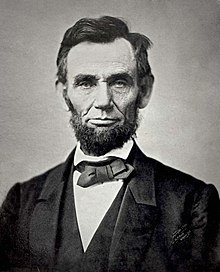

Less than 100 years after the United States had seceded from Great Britain, several Southern states once again found it necessary to dissolve the political bands which connected them to another people and decided to assume among the powers of the earth, the separate and equal station to which the Laws of Nature and of Nature's God entitled them. But they weren't dealing with George III this time. This time they were dealing with a ruthless tyrant who would see a veritable ocean of American blood drench the land before he gave up his power to rule over it. Lincoln aggressively shut down hundreds of newspapers, imprisoned those whose speech he disliked, erected an income tax, and sanctioned all out war on civilians in order to keep the South within his taxable jurisdiction. He introduced conscription to America and forced the poor to go die for his great vision. Of course, conscription is the act of forcing someone to do a job that they would rather not. The penalty for desertion was often death. It is slavery. This is ironic if you believe in the myth of Lincoln waging war on the Confederates in order to end slavery. But as he said in his first inaugural address, slavery was to be a protected institution as long as he was in charge: "I have no purpose, directly or indirectly, to interfere with the institution of slavery in the States where it exists. I believe I have no lawful right to do so, and I have no inclination to do so." In the same speech he pointed out that it was tariffs for which he was willing to fight: "The power confided to me will be used to hold, occupy, and possess the property and places belonging to the Government and to collect the duties and imposts; but beyond what may be necessary for these objects, there will be no invasion". More than 620,000 military deaths (and an untold number of civilian deaths) later, the Jeffersonian idea of states' rights was forever eliminated from the "Land of the Free". Honest Abe's ultimate victory paved the way for the other four despots on this list who inflicted irreparable harm around the world as well as here at home. He truly is number one.

Thursday, February 12, 2015

Give Me Coffee or Give Me Death!


I'm beginning to think that coffee just might be the greatest of all beverages. This is exceptionally high praise coming from someone who savors every delicious drop of bourbon or ale with the relish of a man at worship. In the morning (or more often, the afternoon) when I awake, I sometimes feel downright miserable. There is absolutely no good reason to remove myself from the bed. Nothing awaits me but the world's problems, responsibility to take care of my share of those problems, and certain failure. Woe is me and woe unto the universe. But I know I must get up. I must go to work. I must pay for the roof over my bed.

I make my way into the living room and open the blinds that obscure the sliding door that leads to the balcony. I am greeted by a view of the cold grey sky and the indifferent brick walls of the nearby elementary school. I then open the blinds in the window of the dining area. I watch an indebted driver slowly navigate the icy asphalt in his economy car. Normally, he would need to be wary of the police cruisers that almost constantly patrol the school zone in search of revenue. But the bone chilling wind has eliminated that obstacle for the day. I step into the kitchen and go directly to the coffee maker. I dispose of the previous day's filter and replace it with a new one. I put in a few scoops of the cheapest coffee I could find at the store and then add water to the Cuisinart I had originally purchased as a Christmas gift for someone else. Stainless steel, just as she had requested. At that time, I had yet to develop my appreciation for the heavily caffeinated elixir.

My parents were not and are not coffee drinkers. Growing up, my mom and dad's main sources for caffeine were Coca-Cola (especially for Mom) and very very sweet tea (for Dad). The buzz inducing aroma of coffee beans was ever absent in my childhood home, but each morning it was ever present in the kitchen of my grandmother. Along with cooking bacon and eggs for Grandpa, it's how she began every day. It was in her kitchen that I recall drinking coffee for the first time. Every year she would invite her grandchildren to all spend the Saturday night before Easter with her and then accompany her to the annual pageant that took place at the old Marion Coliseum. Each year, we children would invariably stay up the entire night and then fall asleep during the pageant (always awaking to the simulated thunderstorm that accompanied the crucifixion of Christ). One year, a cousin and I decided that this time we would not fall asleep during the performance. We were determined to witness the entire speechless ode to the life, death, and resurrection of our Savior. He suggested coffee . The mugs were filled and then heavily sweetened. It seemed to me that there was not enough sugar on Earth to make this black potion palatable. Furthermore, it also failed in its mission to keep my sleep deprived body from being lulled by a performance which was every bit as boring as it was elaborate. Coffee was not for me, I decided.

Fast forward a handful of years and I am on a coffee farm in the mountains above San Pedro Sula in Honduras. My uncle and aunt are missionaries in this land. My father made the trip there to help repair a generator for the school at which my uncle and aunt are involved, and he has allowed me to travel with him to this third world civilization located in paradise. Before we made our trek up the steep mountainside on which the coffee plants are grown, my aunt had admonished me not to refuse a cup of coffee when it was offered to me. These people have nothing, she reminded me. They would be very offended if someone were to turn their nose up at their greatest offering of hospitality. Inside the cinder block home, I am prepared to sacrifice my taste buds in the name of politeness. I take the coffee that is offered. I tentatively take a sip. To my surprise, it is delicious. I stop drinking it out of politeness and start drinking it for enjoyment. Why the change? Had my taste buds changed as I had gotten older? Or was it because it was superior coffee freshly brewed on a Honduran farm? Either way, I didn't consider investigating it any further when I returned to the States. I still wasn't interested in coffee.

My affinity for coffee didn't really begin to blossom until some years later. My daughter, who had just turned a year old, spent a month or so in the Cardiac Intensive Care Unit of the Cincinnati Children's Hospital after complications from the rather daunting open heart surgery she had just come through. They kept her sedated for the majority of this time. From time to time, her mother and I would need to get out of the room for a bit to grab something to eat. The hospital provided a common area on the floor for the parents of all the patients in that unit. In this room there was a television, a refrigerator, a microwave, and a coffee machine. The coffee was free and available 24 hours a day. The price was certainly right, so I decided to get a cup. I liked it. I continued to get a cup whenever we would go to that room. It wasn't long before I started taking advantage of the Starbucks that was offered downstairs in the cafeteria. At first, I preferred it with sugar. But after we returned home with our daughter, I began to prefer to drink it black. As black as your heart, dear reader. I drank it at home. I drank it at work. I loved the way it made me feel. I somehow felt better able to grasp the monetary theories I studied if I had a styrofoam cup from which to sip the scalding black liquid that fueled both my body and my brain.

Back at my apartment, I flip the stainless steel Cuisinart on. I then go to the living room closet and pull out the rolled up yoga mat. As I do my daily abdominal exercises, I can hear the bubbling and churning of the machine. On the days that it signals me that the coffee is ready with a beep before I have completed my final set, it becomes much more difficult to focus on the task at hand. Yes, I want ripped abs. But the coffee is literally calling for me. Perhaps it needs me as much as I need it. I roll up the yoga mat and put it away. I return to the kitchen and grab a mug with the words "END THE FED" printed on it. This mug was an impromptu gift to me from the woman who no longer felt she needed the Cuisinart as much as I did. I fill it to the brim.

Before I can even get halfway through that mug, things start to seem better. The apartment seems bigger and brighter. My debts seem more manageable; my job, less tedious. The women I know seem less complicated. I am downright excited about the future. I go to the book shelf and grab a collection of essays championing a return to the gold standard. I take another sip and read Rothbard's complaints about Hayek's theories. Life is good.