My father will be turning 50 on December 27th. I thought this might be a good forum for publicly expressing my appreciation for the man who sired me, raised me, supported me, and continues to teach me. I love you, Dad.
You never know what your child's first memory of you will be. My first memory of my father is his coming to my rescue. We were living in Washington state where Dad was stationed as a very young man in the army. His very reason for joining the military at the age of 18 is a reflection of the values that were instilled in him by his parents. He passed those same values along to me, and I aim to pass them down to my children. He and my mother were teenagers living above the library with a baby (yours truly) in Fairmount, Indiana. He worked at a gas station in south Marion. They were having trouble making ends meet and, in the devastated economic landscape of the early 80s, there weren't a lot of promising employment opportunities for a kid with few marketable skills. It seemed our little family was destined for the welfare rolls. But the young head of the household reasoned that if the government was going to be feeding his family, he should try to earn it. That's how we ended up in Washington and, later, West Germany.
It was at a church we attended in Washington (near Tacoma if not in Tacoma) that I found my head wedged between two twisting iron porch rails. I had followed another boy with an evidently much smaller head and had become entrapped. Naturally, I assumed that I would never be free and began to panic and scream until my father swooped in and yanked me out. (He then proceeded to tease me about it for several years afterward, but that's a small price to pay for my liberation.) It's been almost 30 years since that happened and my dad has come to my rescue countless times since. There was the time that I broke my wrist at work. My employer insisted that I return to work after leaving the ER and sign a statement about how the incident occurred. The problem with this was that I had been heavily sedated in order for them to set my wrist. To say I was loopy would be an understatement. So Dad drove me back to work, all the way listening to me tell him the story over and over because I didn't remember that I had already told him, and then wrote down the events for me when we got there. At least, I think that's what happened. It's still a bit foggy.
Between working to provide for me and my siblings, teaching Sunday school class, ministering to inmates at the county jail, and taking care of my home's maintenance far more often then he should have to (he failed to pass the handyman gene down to me), he has also passed along many aphorisms that I have found very helpful as I daily strive to become a better man. In regards to finances, for example, he pointed out to me that "it's not what you make, but what you keep". It really doesn't do much good to acquire a nice house and nice cars if you're just going to have to turn around and give them to the bank. As a young man admiring the seemingly impressive wealth of others, this (now obvious) truth had a profound effect on my thinking.
I've been all over the world with my dad. From Mt. Rushmore to the castles of Germany, to the mountain villages of Honduras, and back up to Niagra Falls. We've seen the Smoky Mountains and the Atlantic Ocean. We've gazed upon the the Washington Memorial and we have watched the Cubs lose at Wrigley Field. But as much fun as we had and as many memories as were made on those travels, my favorite trips were our commutes to and from our job when he worked with me at the popcorn factory. We would talk and our conversations would cover many subjects. Religion, philosophy, politics, individual sovereignty, economics, and the policies of our employer were all frequently discussed. We have continued those conversations while hunting for mushrooms, shooting our .22s, and, most often, sitting in his home. I really enjoy how it helps me to develop my thoughts further. I agree with almost everything he says. But even when I disagree, I still respect the opinions that he holds and give serious considerations to his arguments when I'm employing my inner dialogue in the never ending task of searching for ultimate truth.
Amazingly, this man who sacrificed so much in order to feed, clothe, and shelter me, this man who continues to help me keep my own home from falling to pieces, this man who my children adore, this man who has literally come to my rescue more times than I can even recall, this man who even helps to feed my cravings for intellectual stimulation has called me his hero. This seems absurd. I cannot even begin to believe I deserve such praise from the man I revere so highly. But I admire that his generosity with encouragement is equal to his generosity of time and effort and all other resources at his disposal.
In the coming week, Mark Anthony McKnight will turn 50 years old. He has spent half of a century on this planet. The world has unquestionably been that much of a better place due to his presence. Here's to a half century more! Happy birthday, Dad!
Sunday, December 22, 2013

Saturday, August 31, 2013
Thus to All Government Schools!

Is there a more destructive and untrustworthy institution than government? The world over, governments are responsible for barbaric atrocities committed on a daily basis. Even here in the "Land of the Free" we are surveilled, taxed, and regulated on a massive scale. The United States is responsible for killing untold numbers of foreign people while maintaining the world's largest prison population at home. They take your money and shower it on well connected corporations and the shiftless alike. They subsidize poor diets, promote harmful medical practices, wage immoral wars, outlaw voluntary activities, make it more difficult to produce goods and services, violate property rights, seek to disarm the public, and even attempt to regulate the sexual activity of consenting adults. And then they lie to your face about EVERYTHING. Go ahead and Google "politicians caught lying". See how long it takes you to browse through the 36,000,000 results. For all these reasons and many more, most people say they do not trust politicians. But then those same people will defend the existence of government schooling for children.
Why do we do it? Why do we allow the same stealing, cheating, killing bureaucrats to claim a right to molding our children's minds? My parents sent me to government schools and my oldest daughter attends a government school today. Part of the problem is that schooling is compulsory. And since taxpayers are forced to fund the government schools, whether they have children or not, the additional cost is much less if you choose a government school over a private school. Homeschooling is a good option, but with the Federal Reserve's never ending war on low prices (or deflation, as they call it), it is increasingly difficult to support a family on one paycheck. For my part, I am trying to make an effort to make sure my daughter is actually learning and encourage her to explore subjects she is interested in. I ask her what she is learning and I ask her opinions on what she is learning. My hope is that these conversations help her to learn to think, which is the most important task of any teacher. And parents, of course, are the most influential teachers a child has, for better or worse.
I was recently discussing this with a co-worker who couldn't disagree with me more. When I explained that I believe after a child is taught the foundation of learning -reading, writing, and arithmetic- they should then have an individualized education that is catered to their interests and aptitude, he literally laughed at me. He told me that all children must be taught the same things. He specifically used the example of the need for every 5th grader to learn the state capitals. I then challenged him to go quiz our mutual co-workers, high school graduates all, on the factory floor to see how many state capitals they could name. Perhaps all the time these people spent practicing their skills in rote memorization would have been better utilized for learning how to make a household budget and balance a checkbook. Maybe they could have learned about the value of savings and why it is necessary in order to improve your life. Maybe they could have put those skills to use right away by going to work and benefiting society rather than playing dodge ball.
So, not only are violent criminals (such as Barack Obama and George W. Bush) ultimately in charge of government schools and shaping the agenda of those schools, but we see that these schools also have a poor track record of actually educating children. Some would say that poorly educated students are exactly what the government desires to produce. I believe this is partly true in matters of foreign wars and the nature of the State itself. But I believe a large part of the problem is that the market is not allowed to work and discover solutions. There are many good teachers in these schools who are passionate about teaching. I personally had some good teachers (but not a single great teacher, though I don't doubt they exist). But what is a good teacher to do with a federal one-size-fits-all template for children who are each unique? What are they to do about the discipline cases who clearly do not want to be there and only serve to make it harder for everyone else to learn? A market would cater to the customers who in this case are the parents. There would be no universal template. There would be no teacher's union to protect bad teachers while not properly rewarding the good teachers. There would be no gang problems in schools because gangbangers would not be required to attend and could be expelled at any moment. Education would be what customers desire and at a desirable price.
The picture at the top of this page is of the old Fairmount High School in Fairmount, Indiana. It is the school that both James Dean and Garfield creator Jim Davis attended. It is literally crumbling to the ground. To me, it is almost the perfect illustration of the condition of learning in America. The main difference is that the state of education in America is yet salvageable. But not until we abolish government schools.
Wednesday, August 21, 2013
Battle Not with Terrorists, Lest Ye Become a Terrorist

“Battle not with monsters, lest ye become a monster, and if you gaze into the abyss, the abyss gazes also into you.” ― Friedrich Nietzsche
The above picture is a pile of corpses being readied for cremation in Dresden during WWII. These people were among the more than 22,000 victims of the infamous allied bombing of the "Florence on the Elbe". In high school I was shown a video of naked Jewish corpses being bulldozed into mass graves in Nazi concentration camps. I was never shown the piles of bodies created by U.S. and British bombing raids. The United States also killed over 100,000 people by bombing Tokyo. The bombardment of Tokyo is known as "the firebombing" because the paper city erupted into flames which killed far more people than the actual bombing. Here is the charred remains of a woman and her child:
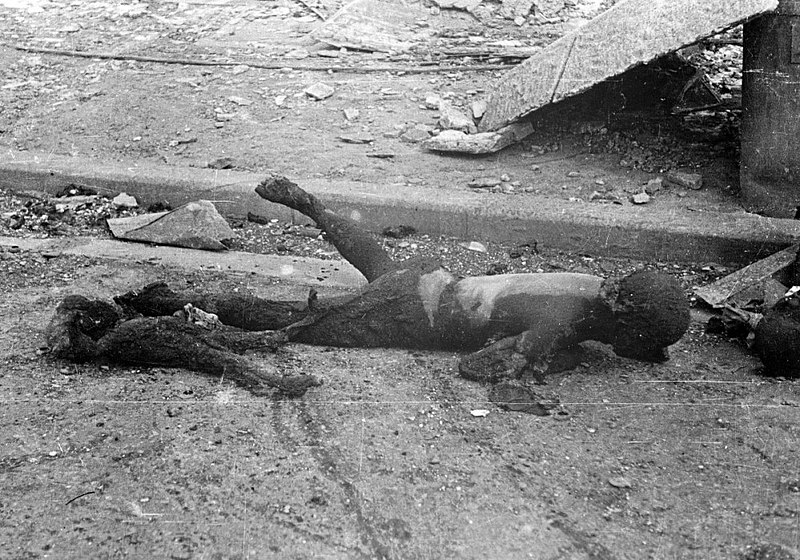
The United States demanded that the Japanese Empire surrender unconditionally. This meant that the Emperor himself must be deposed. But the stupidly proud Japanese government refused to hand over the man they claimed to be a descendant of their god. So, the Americans dropped atomic weapons on defenseless men, women, and children; killing at least 150,000. (By the way, after the Japanese surrendered, they were allowed to keep their emperor anyway.)

There is no doubt that the Nazi government was evil. There is no doubt that the imperial Japanese government was evil. And there is no doubt that the U.S. government was and is evil. In 2006, the U.S. destroyed a school in Pakistan in order to kill the headmaster. 69 children were killed. That's more than were killed in Newtown, Connecticut and in a country we are supposedly allied with.
Dictionary.com defines terrorism as "the use of violence and threats to intimidate or coerce, especially for political purposes." It appears the United States is the world's largest and most dangerous terrorist organization. They have done battle with monsters. The abyss gazes into them.
Tuesday, August 13, 2013
Obedient Hands Serve the Mind

The mind moves the hand.
The hand is the means.
The end lies inside the mind.
The mind judges the ends.
The mind judges the means.
The hand obeys.
The mind must choose.
The foot can only tread one path at a time.
Means are forsaken.
The mind is mistaken.
The end is not reached.
Time to reassess.
The forsaken means
Are the costs of reaching
The ends the mind has chosen.
Satisfaction is the profit experienced when
Forsaken means are valued less than the accomplished ends.
Descartes thought and he was.
Beethoven played and I cried.
The Red King dreamed and Alice lived.
The mind creates and destroys.
The hand obeys.
Thursday, August 8, 2013
Knowledge is the Enemy of Tyrants

Recently I decided to start working my way through the Art of Manliness's 100 Books Every Man Should Read. I had already read several books on the list and enjoyed almost all of those, so I figured this would be a good excuse to reread them while also getting some new material. I also wanted to collect all of these works and place them on my bookshelf, so I decided I would purchase any book I don't already own rather than borrowing from the library. After rereading The Great Gatsby, I turned to the 2nd book on the list: The Prince by Niccolò Machiavelli. I did not have a copy, so I checked online and found that I could get a copy for around $7 before shipping. But I was already waiting on another book I had ordered (not from the list of 100), so I thought I would try out the only local place that might have it: The Unorganized Bookstore.
I had never been to The Unorganized Bookstore and was only aware that they sold used books there. I was pessimistic about my chances of leaving the store with that book, but I figured at the very least I would have a chance to check the place out and see what it is they do offer. My family accompanied me to South Marion as my wife needed to stop by the grocery store anyway. We unloaded from the minivan, entered the bookstore, and were not there 5 minutes before my wife spotted exactly what I wanted. Actually, it wasn't exactly what I wanted. It was better! It was a hard cover copy of The Prince that also included Leviathan by Thomas Hobbes which is also on the list of 100! It was a volume in the Encyclopedia Britannica's Great Books of the Western World series. The series was originally produced in 1952, but this book looked as if it had never been opened. And the price of this glorious find? $2.
There were many great works by authors such as Homer, Plato, Aristotle, Thomas Aquinas, William Shakespeare, René Descartes, John Locke, David Hume, Adam Smith, Immanuel Kant, Herman Melville, Count Leo Tolstoy, Fyodor Mikhailovich Dostoevsky, and Charles Dickens. A jackpot of knowledge. And all for either $1 or $2. Nearly everyone can afford to give themselves a top notch education of western philosophy at this price. But if that's too expensive, you can go to your local library. A few years ago, I went to the library in search of The Theory of Money and Credit by Ludwig von Mises. Not surprisingly, my small town library did not carry it. But they informed me that there is an in state library exchange and they were able to procure a copy for me. I used this same program to get my hands on books by Murray Rothbard, Henry Hazlitt, and Walter Block.
Too much effort to go to the library? The internet provides countless books for free. That's how I read Karl Marx's Communist Manifesto, Leonard Read's I, Pencil, and I don't know how many other essays and articles. You can learn math, science, and history with time and effort as your only costs. Heck, even Ivy League schools are offering free courses.
We live in a world where the cost of accessing priceless knowledge is diminishing to the vanishing point. The excuses for not being educated on important matters such as philosophy, psychology, the world's religions, finances, and economic theory are getting flimsier by the day. My advice to you: Read a book. And after you get done reading that, read another book. It doesn't have to be non-fiction. I always feel a bit wiser after reading Dickens or Steinbeck. And if you read with a dictionary by your side (or dictionary.com, as I do), you will find your vocabulary rapidly expanding. As George Orwell explained, language is thought. The more developed your language; the more developed your thought.
Knowledge is the enemy of tyranny and oppression. This is the reason it was made illegal to teach American slaves to read. The tyrant has a much easier time controlling the ignorant than the informed. Inform yourself. Don't be a slave. Read and think about what you read. Every human action is directed by ideas. Good ideas lead to a good society. Go find those good ideas.
Saturday, August 3, 2013
The Beauty of the Factory
Most people working on a factory floor probably don't stop to admire the beauty of the intricate process of which they are a part. At least, I've never heard any of my coworkers mention any such admiration. Then again, I don't believe I have ever expressed this feeling to any of them either but I feel it just the same. Perhaps they, like me, fear that no one else will understand.
It really is beautiful. I used to work at a factory that produced aluminum wheels for GM cars. Big bars of aluminum called ingots would be delivered to the facility. They would be placed in a giant vat that melted them into a shiny molten liquid to be poured into casting machines. The guys who ran the casting machines were typically burly men who withstood the insane heat for 8 hours at a time. The wheels would then be put on a conveyor and sent to the desprue operators. This is where the holes for the axle were cut or punched out. The wheels would then be hung on racks, 72 at a time, that were referred to as "trees" because of all the "branches". After this, the racks were placed in the heat treat and age ovens. This hardened the wheels so that they could better resist impact.
Depending on which wheel, they either next headed to the shot blaster (to add texture) or straight to Machining. The operators in Machining would slide the wheels off the rack and feed them to an encaged robot. The robot would cycle the wheels through 3 different lathes that cut all of the excess metal from the wheel. It would then return the wheel to the operator for some detail cutting with special tools. The fork truck driver would then move the machined wheels to Final Pack. They would be placed on a monorail that delivered them to rooms where they were primed and painted as they moved along. Eventually, they were taken off of the monorail, packaged, and shipped to assembly plants.
Where is the beauty, you might ask. The beauty is in every minute detail of the process. I am struck with awe as I consider that every conveyor belt, every bolt, and every air hose serves a purpose. Each tool, crafted in some other factory, has a job to do. I worked with men from a myriad of different backgrounds. I worked with men from Australia and Mexico. I worked with a heavily bearded man who chose to live without electricity. We were all brought together to cooperate with each other so that Americans could have wheels on their cars. As far as I know, none of us did this because we were passionate about aluminum wheels or automotive transportation in general. We were all enticed by a wage to produce for our fellow man. I can ascribe the same motive to the people who made the wool gloves I wore on the job, the people who sliced my lunch meat at the deli counter, and the electricians who wired the building. In all, there were millions -if not billions- of people cooperating to make those wheels. And it was the consumer, by use of the market, who directed each and every actor in this uncomprehendingly complicated process.
When consumers bid their dollars on scarce goods and services, prices form. Prices allow human beings to rationally decide what to make, how much to make, and how to distribute it. They are the indispensable tool of the market economy and, therefore, society. Entrepreneurs who please the consumer are rewarded with profits. Entrepreneurs who displease consumers suffer losses and are driven from the market. The resources that had been employed by them become available for the profitable entrepreneurs to use to continue satisfying the most urgent wants of the fickle consumer.
The wheel factory was eventually driven out of business. Chinese factories learned to produce the same quality wheels at a cheaper cost. This enabled them to offer wheels to GM at a much lower price than the American companies could compete with. The machinery was auctioned off and the laborers were released back into the marketplace where they sought the next highest bidder for their work. This too was beautiful.
Thursday, July 25, 2013
Friendly Cops Are Still Cops

The policeman's job is often described as law enforcement and I think this is an appropriate term. They enforce the government's laws whether they be good or bad. And it seems like there are a lot more bad laws than good ones. Now, I can see that officers are put into a bit of a bind. On the one hand, they swear an oath to defend the Constitution. But on the other hand, they are hired to enforce every unconstitutional law that makes it onto the books. Luckily for them, no politician takes the Constitution seriously. So, it's a pretty simple choice. Uphold whatever law they tell you to uphold.
When a government comes up with a law that requires the police to confiscate certain kinds of private property because the government deems that people shouldn't possess it, the policeman complies. They complied when FDR made it illegal to own gold. They complied when it was made illegal to own marijuana. They have complied in many places where it was made illegal to be armed. The Constitution requires that the government follow due process and convict you of criminal activity before they seize your property. But if the government classifies the very possession of your property as illegal, then they will seize it outright.
Some people can see that most everything the government does is either stupid, wasteful, or downright evil. But those same people are quick to defend the local policeman as a brave first responder and protector of the citizenry. In many cases, this is certainly an accurate description. But I would ask those people to keep in mind the fact that government edicts, no matter how stupid, wasteful, or evil, would be completely harmless without the police there to inflict the government's will on the people. It's been noted that the police are to the government as the edge is to the knife.
And who out there feels relieved to see a policeman in their rearview mirror? Do you think, "Oh, good! A public servant has arrived to help make my trip more pleasant"? Or do you, like me, feel your heart sink into your stomach the second those lights come on? Perhaps you, a supposedly free individual, didn't put your seatbelt on. Maybe you didn't provide a booster seat for your 3rd grader. Maybe your vehicle exceeded the arbitrary speed posted along the highway. If so, beware. The policeman lies in wait like a roadside bandit seeking to plunder you on behalf of the government.
Since the government insists on virtually monopolizing the field of police work, we must encourage their defense of life and property even as we discourage their improper use of violence to enforce unconstitutional and harmful laws that basically amount to a transfer of wealth from the citizens to the State. I feel like I should note that as far as police chiefs go, Marion could do a lot worse than the gregarious Gilbert. Coming from a radical libertarian such as myself, this should be viewed as the ultimate compliment for a government enforcer.
Saturday, July 20, 2013
Free People Read Mises

Ludwig von Mises was a genius. He was the man who advanced economics by applying the theory of diminishing marginal utility to money. He was the man who showed how monetary inflation directly leads to the boom & bust cycles that most economists had taken for granted. He obliterated all economic arguments in favor of socialism by explaining that a centrally controlled economy has no free market price system, and thus is irrational. But his greatest genius was in his ability to lift the veil from the eyes of those who read his writings. He had a knack for stating the truth in a way that not only helped you see the errors of opposing arguments, but also made you realize that you knew the truth all along. Reading his great works like Theory & History gives you the insight and ability to resist the false economic and political doctrines that are daily used in order to convince the masses to support, or at least not resist, the redistribution of their wealth and personal decision making to a select few.
I'll give you an example of how Mises uses logic to cut away those fallacies that obscure what should be obvious truths. Capitalism is often disparaged as a system that robs the working poor in order to enrich the barons of big business. The blood of the working man greases the wheels of industry. The rich get richer as the poor get poorer. The masses are merely slaves who labor so that the capitalists do not have to. But then Mises points out the obvious: "Capitalism is not simply mass production, but mass production to satisfy the needs of the masses." It's as if he has turned the closet light on and revealed that the capitalist bogies of socialist lore are not really there. He continues:
All the early factories turned out was designed to serve the masses, the same strata that worked in the factories. They served them either by supplying them directly or indirectly by exporting and thus providing for them foreign food and raw materials. This principle of marketing was the signature of early capitalism as it is of present-day capitalism. The employees themselves are the customers consuming the much greater part of all goods produced. They are the sovereign customers who are "always right." Their buying or abstention from buying determines what has to be produced, in what quantity, and of what quality. In buying what suits them best they make some enterprises profit and expand and make other enterprises lose money and shrink. Thereby they are continually shifting control of the factors of production into the hands of those businessmen who are most successful in filling their wants. Under capitalism private property of the factors of production is a social function. The entrepreneurs, capitalists, and land owners are mandataries, as it were, of the consumers, and their mandate is revocable. In order to be rich, it is not sufficient to have once saved and accumulated capital. It is necessary to invest it again and again in those lines in which it best fills the wants of the consumers. The market process is a daily repeated plebiscite, and it ejects inevitably from the ranks of profitable people those who do not employ their property according to the orders given by the public. But business, the target of fanatical hatred on the part of all contemporary governments and self-styled intellectuals, acquires and preserves bigness only because it works for the masses. The plants that cater to the luxuries of the few never attain big size. The shortcoming of nineteenth-century historians and politicians was that they failed to realize that the workers were the main consumers of the products of industry. In their view, the wage earner was a man toiling for the sole benefit of a parasitic leisure class. They labored under the delusion that the factories had impaired the lot of the manual workers. If they had paid any attention to statistics they would easily have discovered the fallaciousness of their opinion. Infant mortality dropped, the average length of life was prolonged, the population multiplied, and the average common man enjoyed amenities of which even the well-to-do of earlier ages did not dream.
I wonder how anyone promoting collectivism or interventionism can read such offerings as Liberty and Property, Liberalism, or The Free Market and its Enemies and not feel embarrassed about continuing in their destructive ideologies.
Ludwig von Mises, along with Frédéric Bastiat and Murray Rothbard, has had an immeasurable impact on my thinking. This great economist/philosopher/man should be on everyone's reading list. Knowledge poured from his pen and it is a shame that so many will never take the time to sop it up with their minds. If they did, the world would likely be a better place.
Thursday, July 11, 2013
Who's the Boss?
As I was mowing my front lawn one day, I noticed a couple of large bikers stopped in the middle of my street. They seemed to be interested in what I was doing, but I figured they were looking for someone else's place, so I ignored them and continued mowing my lawn. When I made another pass and started heading back toward the street, the bearded men had moved their Harleys onto the sidewalk in front of my house. One had dismounted and it was clear they wanted to talk to me. I stopped the mower and approached them. "How's it goin'?" I asked in the most booming voice I could muster. The biker was holding some papers and alternated between looking confusedly at them and looking confusedly at my house. "Do you live here?" he asked. I replied that I did. He read my address from the paper he was holding and I confirmed that this was my address. "You ain't gonna like this", he said as he handed me the paper. It was a list of houses to be auctioned off in a tax sale which was to be held the next day. The burly bikers were checking out homes on the list and knew something was screwy when they found me in the middle of maintaining the property.
I was very confused because I knew that when we purchased the property the previous year we had arranged for our taxes to be included in our mortgage payment. And we had not missed a single payment. What the hell was going on here? One of the large men dialed up the county treasurer and I began trying to get to the bottom of the mystery. The person on the other end of the phone (not the actual treasurer) was very irritated that I was calling her late on a Friday. After some pleading on my part, she grudgingly looked up the info I was requesting. It turned out that my garage was on a lot that somehow didn't get included in my mortgage (apparently my house sits on 6 lots. It looks like 1 to me). They had the previous owner on the hook for the taxes and had been sending delinquent notices to our house. Since we don't read other people's mail, we would always put the envelopes back in the mailbox with the note "Doesn't live here" scrawled on them, never suspecting information we desperately needed was inside.
"Why didn't anyone warn us before it went up for auction?" I demanded. "We did send notification to the owner", she snapped back. I could almost hear her roll her eyes. I decided to try a different tack. "Ok, obviously there was some confusion and you guys are auctioning off the wrong house. You didn't know, but you do now. How can I get this auction stopped?" She responded that there was no way to stop the auction. "Is there any way to get it delayed?" Nope. Quite impossible. Especially late on a Friday afternoon. "Can you at least have it clarified that it is just the garage and not my house? People are going to bid thinking they are getting all of my property!" But her hands were tied. Absolutely nothing she could do. The county was completely powerless to do anything other than take my property away and sell it to someone else. So, my garage was auctioned off. The real estate company bought it from the winning bidder, put it in our name, and we were forced to pay back taxes on it.
Fast forward to this morning. My wife woke me in order to inform me that our van, which we had taken to a mechanic the day before, needed a part that the mechanic did not have in stock. Without this repair, we would have no air conditioning. It would take until tomorrow to get the part, and once they did get it, it would take 8 hours to do the job. This presented a huge problem because we are leaving for the Gulf Coast tomorrow! We cannot drag our small children (Ages: 10, 4, and 1) to the Deep South in the middle of July with no AC. I advised my wife to start calling other area mechanics to see if any of them had the part so that we could take the van there. Since I had worked the night before, and had only been asleep for a couple of hours by this point, I immediately returned to my slumber.
She reappeared after a time and woke me once more. She had been unable to locate any area mechanics who could help but she had called the dealership from which we had purchased the vehicle in the first place. They had sold us this van just last winter and assured us back then that the AC was working properly. We tried it out, and it seemed to work. Once the weather warmed up, my wife attempted to use the air conditioning on a trip to Cincinnati. It worked again...for part of the trip. It turned out that it was leaking freon. My wife was now calling to chew them out for putting us in this predicament. But they had some good news for us. They had the part in stock and could fix it in 2 hours. It would only cost $450. It made me wince to think about paying $450 to have them repair something they sold us as already functioning properly. But vacation looms and no one else can do it. Since the dealership is an hour away, and since I had to return to work in the afternoon, I got out of bed and watched the kids while my wife went and retrieved our van from one mechanic so that she could take it to another.
A couple of hours later, I received a text from my wife. She had more bad news. The dealership was claiming that they had run into further problems with the AC. They would not be able to finish the job until the next day and the new price was $650. My blood boiled. I had had enough. I called into the dealership and explained to them that I had no intentions of paying $650 and that I would instead pay the originally agreed upon price of $450. The customer service rep then launched into an explanation of what was wrong with the car and why we had incurred additional costs. I could tell he had no intention of lowering the price without a struggle. But unlike the lady from the treasurer's office a couple of years before, he was not rude. On the contrary, he remained extremely polite as I continually insisted that we would not pay a penny more than the $450 I already didn't want to pay. My tone was also different. Instead of fruitlessly pleading to the person on the other end of the phone to have mercy on me, I was giving the commands. 'You will fix the air conditioner. And I will only pay $450.' At last, the customer service rep agreed. I will only be charged $450. And I can now choose to cease business transactions with that particular seller.
Not so with the county government. The only way to escape the clutches of one thieving government is to run into the arms of another thieving government. The new government will have the same disconnect with consumers as the last. On the market, the customer is always right. But the various governments do not see you as a customer. They see you as a subject who must submit to their demands. If a business owner makes a habit of displeasing consumers, he will lose his business. The government might change faces from time to time, but the machine lives on. It continues to thrash all who oppose it.
Conclusion: On the market, the customer is the boss. When dealing with the government, those same customers cow to the will of state officials. We must shrink the public sector and let the private sector grow in order to increase our control of society.
I was very confused because I knew that when we purchased the property the previous year we had arranged for our taxes to be included in our mortgage payment. And we had not missed a single payment. What the hell was going on here? One of the large men dialed up the county treasurer and I began trying to get to the bottom of the mystery. The person on the other end of the phone (not the actual treasurer) was very irritated that I was calling her late on a Friday. After some pleading on my part, she grudgingly looked up the info I was requesting. It turned out that my garage was on a lot that somehow didn't get included in my mortgage (apparently my house sits on 6 lots. It looks like 1 to me). They had the previous owner on the hook for the taxes and had been sending delinquent notices to our house. Since we don't read other people's mail, we would always put the envelopes back in the mailbox with the note "Doesn't live here" scrawled on them, never suspecting information we desperately needed was inside.
"Why didn't anyone warn us before it went up for auction?" I demanded. "We did send notification to the owner", she snapped back. I could almost hear her roll her eyes. I decided to try a different tack. "Ok, obviously there was some confusion and you guys are auctioning off the wrong house. You didn't know, but you do now. How can I get this auction stopped?" She responded that there was no way to stop the auction. "Is there any way to get it delayed?" Nope. Quite impossible. Especially late on a Friday afternoon. "Can you at least have it clarified that it is just the garage and not my house? People are going to bid thinking they are getting all of my property!" But her hands were tied. Absolutely nothing she could do. The county was completely powerless to do anything other than take my property away and sell it to someone else. So, my garage was auctioned off. The real estate company bought it from the winning bidder, put it in our name, and we were forced to pay back taxes on it.
Fast forward to this morning. My wife woke me in order to inform me that our van, which we had taken to a mechanic the day before, needed a part that the mechanic did not have in stock. Without this repair, we would have no air conditioning. It would take until tomorrow to get the part, and once they did get it, it would take 8 hours to do the job. This presented a huge problem because we are leaving for the Gulf Coast tomorrow! We cannot drag our small children (Ages: 10, 4, and 1) to the Deep South in the middle of July with no AC. I advised my wife to start calling other area mechanics to see if any of them had the part so that we could take the van there. Since I had worked the night before, and had only been asleep for a couple of hours by this point, I immediately returned to my slumber.
She reappeared after a time and woke me once more. She had been unable to locate any area mechanics who could help but she had called the dealership from which we had purchased the vehicle in the first place. They had sold us this van just last winter and assured us back then that the AC was working properly. We tried it out, and it seemed to work. Once the weather warmed up, my wife attempted to use the air conditioning on a trip to Cincinnati. It worked again...for part of the trip. It turned out that it was leaking freon. My wife was now calling to chew them out for putting us in this predicament. But they had some good news for us. They had the part in stock and could fix it in 2 hours. It would only cost $450. It made me wince to think about paying $450 to have them repair something they sold us as already functioning properly. But vacation looms and no one else can do it. Since the dealership is an hour away, and since I had to return to work in the afternoon, I got out of bed and watched the kids while my wife went and retrieved our van from one mechanic so that she could take it to another.
A couple of hours later, I received a text from my wife. She had more bad news. The dealership was claiming that they had run into further problems with the AC. They would not be able to finish the job until the next day and the new price was $650. My blood boiled. I had had enough. I called into the dealership and explained to them that I had no intentions of paying $650 and that I would instead pay the originally agreed upon price of $450. The customer service rep then launched into an explanation of what was wrong with the car and why we had incurred additional costs. I could tell he had no intention of lowering the price without a struggle. But unlike the lady from the treasurer's office a couple of years before, he was not rude. On the contrary, he remained extremely polite as I continually insisted that we would not pay a penny more than the $450 I already didn't want to pay. My tone was also different. Instead of fruitlessly pleading to the person on the other end of the phone to have mercy on me, I was giving the commands. 'You will fix the air conditioner. And I will only pay $450.' At last, the customer service rep agreed. I will only be charged $450. And I can now choose to cease business transactions with that particular seller.
Not so with the county government. The only way to escape the clutches of one thieving government is to run into the arms of another thieving government. The new government will have the same disconnect with consumers as the last. On the market, the customer is always right. But the various governments do not see you as a customer. They see you as a subject who must submit to their demands. If a business owner makes a habit of displeasing consumers, he will lose his business. The government might change faces from time to time, but the machine lives on. It continues to thrash all who oppose it.
Conclusion: On the market, the customer is the boss. When dealing with the government, those same customers cow to the will of state officials. We must shrink the public sector and let the private sector grow in order to increase our control of society.
Saturday, July 6, 2013
Welcome to Dystopia
Sometimes I feel like I'm living in a dystopian novel...
As I am driving down a country road with my windows down on a beautiful summer day, I am listening to the Cubs pregame show. The broadcasters are talking about the upcoming contest and even interview some players. Then it's game time. Cue the Federal Anthem. I reach over and turn the volume down and wait until I'm certain it is over before I return the volume setting to its previous level. I have seen and heard the Anthem played before a baseball game countless times. But I'm done listening to it. Why do they feel the need to play this government hymnal before sporting events anyway? Because they love theirgovernment country, comrade...
Recently, my family made the trek to the north side of Chicago to visit Wrigley Field. My grandparents, parents, two siblings, my wife, my kids, and myself. Once we arrived downtown, we all boarded a subway train that would eventually take us above ground and to our destination. As we sat on the train, inches away from a homeless man who was using the transit system as a mobile bed, we were continually alerted via speaker of the approaching stops. Between these announcements we were encouraged by the speaker to report any suspicious activities of our fellow citizens. I could almost hear George Orwell narrating my thoughts...
I discovered today, as I was reading the newspaper, that they have implemented "Blue Alerts" in Indiana. Evidently, it works like an Amber Alert by notifying the public that a policeman has been killed or injured. I would be far more interested in an alert that warned me of police officers who had just killed or injured a member of the public. Of course, that happens far more often. But what I really can't stand is the hubris of the government police force. They really do consider it more important to protect their brothers in arms than the people they are paid to protect, viz., the citizenry. This is just another step in the continual propaganda push to teach us that some animals are more equal than others...
Edward Snowden has become an enemy of the state for revealing to the American public that the U.S. government is spying on us and everyone else on the planet. Ironically, they are now charging him with espionage. It was revealed that the NSA has the capability to monitor every digital transaction of the public and is storing that information in case it ever wants to. Their reasoning is that any one of us could turn out to be a terrorist, so we all must be treated like potential enemies of the empire. They also would like for us to stop worrying that this information can or will be used for political purposes. I mean, it's not like some giant government department just admitted to using its vast powers for that very reason...
Sometimes I feel like I am living in a dystopian novel...
As I am driving down a country road with my windows down on a beautiful summer day, I am listening to the Cubs pregame show. The broadcasters are talking about the upcoming contest and even interview some players. Then it's game time. Cue the Federal Anthem. I reach over and turn the volume down and wait until I'm certain it is over before I return the volume setting to its previous level. I have seen and heard the Anthem played before a baseball game countless times. But I'm done listening to it. Why do they feel the need to play this government hymnal before sporting events anyway? Because they love their
Recently, my family made the trek to the north side of Chicago to visit Wrigley Field. My grandparents, parents, two siblings, my wife, my kids, and myself. Once we arrived downtown, we all boarded a subway train that would eventually take us above ground and to our destination. As we sat on the train, inches away from a homeless man who was using the transit system as a mobile bed, we were continually alerted via speaker of the approaching stops. Between these announcements we were encouraged by the speaker to report any suspicious activities of our fellow citizens. I could almost hear George Orwell narrating my thoughts...
I discovered today, as I was reading the newspaper, that they have implemented "Blue Alerts" in Indiana. Evidently, it works like an Amber Alert by notifying the public that a policeman has been killed or injured. I would be far more interested in an alert that warned me of police officers who had just killed or injured a member of the public. Of course, that happens far more often. But what I really can't stand is the hubris of the government police force. They really do consider it more important to protect their brothers in arms than the people they are paid to protect, viz., the citizenry. This is just another step in the continual propaganda push to teach us that some animals are more equal than others...
Edward Snowden has become an enemy of the state for revealing to the American public that the U.S. government is spying on us and everyone else on the planet. Ironically, they are now charging him with espionage. It was revealed that the NSA has the capability to monitor every digital transaction of the public and is storing that information in case it ever wants to. Their reasoning is that any one of us could turn out to be a terrorist, so we all must be treated like potential enemies of the empire. They also would like for us to stop worrying that this information can or will be used for political purposes. I mean, it's not like some giant government department just admitted to using its vast powers for that very reason...
Sometimes I feel like I am living in a dystopian novel...
Tuesday, July 2, 2013
The Human Aspect of Budget Cuts
It would be difficult to drive through South Marion without noticing that it is, to use the recent words from a friend of mine, economically blasted. From downtown to 'The Village", vacant lots, dilapidated houses, and abandoned properties are commonplace. I grew up attending the Adams Street Christian Church on the corner of 32nd and Adams. My grandmother lived on 31st and Adams. I even lived in a rental on Adams between 31st and 32nd for a short time as a child, so I realize that the people in this area have been struggling for a long time. But it seems as though it has been getting worse over the last couple of decades.
Employment opportunities, especially in manufacturing, have retreated from Marion. Old stalwarts of Marion industry have packed up and headed for greener pastures...or just closed their doors forever. Many of these problems are not unique to Marion. On the contrary, it seems that much of America is stuck in an economic quagmire. The government has been very active in trying to assist those who find themselves unemployed while still supporting the chronically indigent. But welfare is a poor substitute for employment. What we need, what Marion needs, is an economic renaissance.
What can Marion's city government do to help bring about such a renaissance? They have tried many things in recent years. For example, Mayor Seybold has spent a lot of time in China purportedly in order to lure employers here. The city has also focused much effort on developing the I-69 corridor. Part of that effort resulted in Ivy Tech abandoning its old campus for the plush new digs it currently occupies. If I recall correctly, this was going to help educate the citizens of Marion who would in turn help build the economic infrastructure that would put the city back on track. You might argue that the government has confused cause with effect in this endeavor and that a citizenry that is able to create wealth and escape poverty is more likely to have the resources to educate themselves and their children, but you cannot argue that the government has not used the resources at its disposal in an attempt to combat these economic problems. So, why can't they seem to fix Marion? Because they do not possess the tools for the job.
Governments cannot produce wealth. They either redistribute wealth that has already been created, or they consume it. On the market, wealth is created whenever someone combines resources in a way that consumers prefer to the state in which those resources previously existed. This is expressed through profits that are reaped via free exchange. The government exists outside of the market and is completely dependent upon the the market for its survival. The government operates by confiscating wealth that is created on the market and then spending that wealth on resources such as roads, police, firemen, etc. So it should be clear that these government services are ancillary to the wealth created by the governed community. We cannot pay for these things if they have not been created in the first place. Nor can we pay for these things if we do not first make money with which to pay.
The only way the government can help is by decreasing its burden on the suffering public. As Henry David Thoreau said in his legendary essay which inspired both Mohandas Gandhi and Martin Luther King Jr., "[G]overnment never of itself furthered any enterprise but by the alacrity with which it got out of its way". Ludwig von Mises seemed to concur over a century later when he penned, "All that good government can do to improve the material well-being of the masses is to establish and to preserve an institutional setting in which there are no obstacles to the progressive accumulation of new capital and its utilization for the improvement of technical methods of production". If the public has fallen on hard financial times, the government must shrink. It must return the resources it has taken from the public. Recently, the Marion city council has been attempting to do just that. But no one said it would be easy to remove these tax feeders from the public trough.
Apparently, these "public servants" spent several hours pleading for their share of the severely reduced revenue stream. Each one complained that the cuts were too severe and that their particular department was already underfunded. I don't blame them for being concerned about their jobs. I understand that they have families for whom to provide. But I also understand that unlike a market transaction, where entrepreneurs provide for their families by pleasing their customers, the interests of these government employees are at odds with the interests of the taxpayers. They want the taxpayers to have less so that they can have more.
It was recently inferred by my friend Aaron Pratt that I do not acknowledge the "human aspect" when I call for immediate and drastic cuts to the government budget. I think the assorted city department heads should go visit the human beings who reside in South Marion. I wonder if they would find any sympathetic ears if they complained to them about not having enough money.
Employment opportunities, especially in manufacturing, have retreated from Marion. Old stalwarts of Marion industry have packed up and headed for greener pastures...or just closed their doors forever. Many of these problems are not unique to Marion. On the contrary, it seems that much of America is stuck in an economic quagmire. The government has been very active in trying to assist those who find themselves unemployed while still supporting the chronically indigent. But welfare is a poor substitute for employment. What we need, what Marion needs, is an economic renaissance.
What can Marion's city government do to help bring about such a renaissance? They have tried many things in recent years. For example, Mayor Seybold has spent a lot of time in China purportedly in order to lure employers here. The city has also focused much effort on developing the I-69 corridor. Part of that effort resulted in Ivy Tech abandoning its old campus for the plush new digs it currently occupies. If I recall correctly, this was going to help educate the citizens of Marion who would in turn help build the economic infrastructure that would put the city back on track. You might argue that the government has confused cause with effect in this endeavor and that a citizenry that is able to create wealth and escape poverty is more likely to have the resources to educate themselves and their children, but you cannot argue that the government has not used the resources at its disposal in an attempt to combat these economic problems. So, why can't they seem to fix Marion? Because they do not possess the tools for the job.
Governments cannot produce wealth. They either redistribute wealth that has already been created, or they consume it. On the market, wealth is created whenever someone combines resources in a way that consumers prefer to the state in which those resources previously existed. This is expressed through profits that are reaped via free exchange. The government exists outside of the market and is completely dependent upon the the market for its survival. The government operates by confiscating wealth that is created on the market and then spending that wealth on resources such as roads, police, firemen, etc. So it should be clear that these government services are ancillary to the wealth created by the governed community. We cannot pay for these things if they have not been created in the first place. Nor can we pay for these things if we do not first make money with which to pay.
The only way the government can help is by decreasing its burden on the suffering public. As Henry David Thoreau said in his legendary essay which inspired both Mohandas Gandhi and Martin Luther King Jr., "[G]overnment never of itself furthered any enterprise but by the alacrity with which it got out of its way". Ludwig von Mises seemed to concur over a century later when he penned, "All that good government can do to improve the material well-being of the masses is to establish and to preserve an institutional setting in which there are no obstacles to the progressive accumulation of new capital and its utilization for the improvement of technical methods of production". If the public has fallen on hard financial times, the government must shrink. It must return the resources it has taken from the public. Recently, the Marion city council has been attempting to do just that. But no one said it would be easy to remove these tax feeders from the public trough.
Apparently, these "public servants" spent several hours pleading for their share of the severely reduced revenue stream. Each one complained that the cuts were too severe and that their particular department was already underfunded. I don't blame them for being concerned about their jobs. I understand that they have families for whom to provide. But I also understand that unlike a market transaction, where entrepreneurs provide for their families by pleasing their customers, the interests of these government employees are at odds with the interests of the taxpayers. They want the taxpayers to have less so that they can have more.
It was recently inferred by my friend Aaron Pratt that I do not acknowledge the "human aspect" when I call for immediate and drastic cuts to the government budget. I think the assorted city department heads should go visit the human beings who reside in South Marion. I wonder if they would find any sympathetic ears if they complained to them about not having enough money.
Monday, June 24, 2013
The Prices of Obamacare
It looks like local schools are being forced to experience what happens when the government imposes wage controls. The Affordable Care Act (ACA), popularly known as Obamacare, mandates that businesses with 50 or more employees provide an "affordable opportunity" at health insurance to all full-time workers, which the ACA arbitrarily defines as those above the 30-hours per week threshold. Schools are now finding that they must reduce the hours of teacher's aides and substitutes. Some will be losing their jobs.
And so it goes with all government interventions into the economy. Governments seem to be ignorant of economic law. That, or they are exploiting the economic ignorance of the citizens. They always offer a free lunch and, as we all know, there ain't no such thing. They act as if prices are random and can be changed at will without negative consequences. Perhaps if we understood how prices, including wages and compensation such as insurance, come about on the market, we would be less likely to allow them to meddle with them.
One of the main themes in economics is the investigation of how demand for goods and services is to be met by an adequate supply. For example: How can we make sure that enough food is produced and, once it is produced, how do we make sure it is distributed to all who need it? When there are people literally starving in places like the African and Asian continents, it is clear that something is not working. Supply is not meeting demand. But why? Why is the amount of poverty that is found in Western nations so minuscule when compared to that of the third world?
Prices are what balance supply & demand. Indeed, many economists say prices are where supply meets demand. And only on a free market, as Ludwig von Mises showed in his brilliant essay Economic Calculation in the Socialist Commonwealth, can true prices form. Let's say I am willing to spend $5 on a glass of lemonade (I must be really thirsty) and I know of a lemonade stand that will sell me a glass for that price just a few blocks away. But when I get to my destination, I see that a rival lemonade stand has set up shop across the street. This new stand is selling lemonade for $2.50. I can now get two glasses for what I would have spent on one. Or I can buy one glass and still have $2.50 left over to spend on something else. The demand for $5.00 lemonade plummeted as soon as someone offered it for $2.50. Unless the first lemonade stand offers a more competitive price, they will not be able to move their supply and they will be driven out of the market. But by lowering their price, they increase the demand for their product. Of course, prices are bid up by consumers vying for a glass of lemonade in the same way. If I offer $2.50 for a glass of lemonade, but the guy behind me in line is willing to pay $5.00, I must either pony up or bow out. The market price will be the result of this competitive bidding by both sellers and buyers.
Now let's imagine that the government intervenes. They decree that no one should have to pay more than $1 for a glass of lemonade. Even if we assume that lemonade is still profitable at $1 a glass, we still are heading for trouble. Why? Because supply & demand are about to be thrown out of balance. The lower price will increase demand. There will not be enough lemonade for everyone to purchase it at that price. You will have long lines of people hoping to get their glass before the supplier runs out. Also, with the lower price, profits will be reduced. Less profits means less entrepreneurs will be attracted to the lemonade market, which means that there will be a reduced supply. Supply decreases while demand increases. That's what we call a shortage.
Take away the price control and what happens? Prices are allowed to rise until supply meets demand. Supply increases and demand decreases. Everyone who is willing to pay the market price is able to acquire a glass of lemonade. So, when you see the vast areas of the earth where people can't seem to feed themselves, you should immediately suspect that something is wrong with their price system. Someone has intervened, if not with direct price controls, then by debasing the currency or being destructive of private property rights. For a sound currency and strong property rights are the necessary foundation of a free market and, as I noted earlier, a free market is necessary for the formation of market prices.
How does this apply to the wages of local teacher's aides? Wages are also prices. They are the price of labor. Employers will compete against each other to bid wages up to the maximum level they can pay and still profit. If an employer is paying a wage of $10 an hour while making $15 an hour from that employee's production, then another employer will see an opportunity to undercut the first employer and still make a profit by bidding $11 an hour. It should be becoming clear by now why government intervention cannot improve upon this arrangement.
The Affordable Care Act demands that employers increase the wages of "full-time" workers by way of paying for their insurance. But the law does not call new resources into existence. It is merely redistributing already existing resources in a manner the government prefers instead of the manner that the market prefers (the market being you, me, and everyone who exchanges goods and services). The increased price of school employees by federal edict has reduced the demand for their services. Supply & demand will always balance, one way or another.
Apply this same logic to the FDA, EPA, OSHA, or the Department of Education, and you will soon wonder if the federal government is worth the price you pay.
And so it goes with all government interventions into the economy. Governments seem to be ignorant of economic law. That, or they are exploiting the economic ignorance of the citizens. They always offer a free lunch and, as we all know, there ain't no such thing. They act as if prices are random and can be changed at will without negative consequences. Perhaps if we understood how prices, including wages and compensation such as insurance, come about on the market, we would be less likely to allow them to meddle with them.
One of the main themes in economics is the investigation of how demand for goods and services is to be met by an adequate supply. For example: How can we make sure that enough food is produced and, once it is produced, how do we make sure it is distributed to all who need it? When there are people literally starving in places like the African and Asian continents, it is clear that something is not working. Supply is not meeting demand. But why? Why is the amount of poverty that is found in Western nations so minuscule when compared to that of the third world?
Prices are what balance supply & demand. Indeed, many economists say prices are where supply meets demand. And only on a free market, as Ludwig von Mises showed in his brilliant essay Economic Calculation in the Socialist Commonwealth, can true prices form. Let's say I am willing to spend $5 on a glass of lemonade (I must be really thirsty) and I know of a lemonade stand that will sell me a glass for that price just a few blocks away. But when I get to my destination, I see that a rival lemonade stand has set up shop across the street. This new stand is selling lemonade for $2.50. I can now get two glasses for what I would have spent on one. Or I can buy one glass and still have $2.50 left over to spend on something else. The demand for $5.00 lemonade plummeted as soon as someone offered it for $2.50. Unless the first lemonade stand offers a more competitive price, they will not be able to move their supply and they will be driven out of the market. But by lowering their price, they increase the demand for their product. Of course, prices are bid up by consumers vying for a glass of lemonade in the same way. If I offer $2.50 for a glass of lemonade, but the guy behind me in line is willing to pay $5.00, I must either pony up or bow out. The market price will be the result of this competitive bidding by both sellers and buyers.
Now let's imagine that the government intervenes. They decree that no one should have to pay more than $1 for a glass of lemonade. Even if we assume that lemonade is still profitable at $1 a glass, we still are heading for trouble. Why? Because supply & demand are about to be thrown out of balance. The lower price will increase demand. There will not be enough lemonade for everyone to purchase it at that price. You will have long lines of people hoping to get their glass before the supplier runs out. Also, with the lower price, profits will be reduced. Less profits means less entrepreneurs will be attracted to the lemonade market, which means that there will be a reduced supply. Supply decreases while demand increases. That's what we call a shortage.
Take away the price control and what happens? Prices are allowed to rise until supply meets demand. Supply increases and demand decreases. Everyone who is willing to pay the market price is able to acquire a glass of lemonade. So, when you see the vast areas of the earth where people can't seem to feed themselves, you should immediately suspect that something is wrong with their price system. Someone has intervened, if not with direct price controls, then by debasing the currency or being destructive of private property rights. For a sound currency and strong property rights are the necessary foundation of a free market and, as I noted earlier, a free market is necessary for the formation of market prices.
How does this apply to the wages of local teacher's aides? Wages are also prices. They are the price of labor. Employers will compete against each other to bid wages up to the maximum level they can pay and still profit. If an employer is paying a wage of $10 an hour while making $15 an hour from that employee's production, then another employer will see an opportunity to undercut the first employer and still make a profit by bidding $11 an hour. It should be becoming clear by now why government intervention cannot improve upon this arrangement.
The Affordable Care Act demands that employers increase the wages of "full-time" workers by way of paying for their insurance. But the law does not call new resources into existence. It is merely redistributing already existing resources in a manner the government prefers instead of the manner that the market prefers (the market being you, me, and everyone who exchanges goods and services). The increased price of school employees by federal edict has reduced the demand for their services. Supply & demand will always balance, one way or another.
Apply this same logic to the FDA, EPA, OSHA, or the Department of Education, and you will soon wonder if the federal government is worth the price you pay.
Friday, June 14, 2013
Don't Worship the Federal Flag
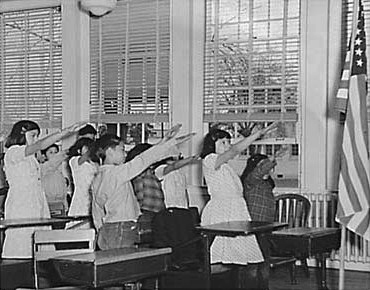
As I was driving home from work early this morning, a reporter on the radio was announcing that Syria had crossed a "red line" and that Barack Obama has decided that we should (overtly) send weapons to the men who are doing battle with the Assad regime. I looked out the window and saw American flags lining Main Street. My blood began to boil. As the federal government dives into yet another armed conflict in the Middle East, another regional dispute that's outcome has no bearing on the typical American's life, our cities and towns are celebrating that government by displaying its star spangled banner with pride.
Once upon a time, I adored that flag. I had been taught to pledge my allegiance to that flag as a child. It stood for freedom and capitalism and general awesomeness. As far as I was concerned, the good guys carried that flag and everyone else was inferior if not evil. But now I see it for what it really is. It is nothing more than the logo of the empire and, since September 11th 2001, has come to be nearly ubiquitously associated with support for the empire's wars. It has also been transformed into a sort of religious symbol. We are told not to desecrate it. We are expected to stand with our hands over our hearts and face it as the federal anthem plays.Why on earth would we ever want to worship this symbol of our tyrannical federal government?
Perhaps you don't find the federal government to be particularly tyrannical. Perhaps you don't mind universal warrantless searches of phone records and email accounts. Perhaps you don't mind the IRS targeting political dissidents (political dissident being defined as someone who promotes the Constitution). Perhaps you don't mind the enormous tax burden they place on your shoulders. Perhaps you don't mind that they borrow money on your credit (the promise to tax you even more) and won't be able to pay it all back. Perhaps you don't mind them groping your genitals at the airport, dropping bombs on foreign children, sending your friends and family off to die in pointless wars, wasting resources on drug prohibition, destroying the healthcare market, subsidizing giant corporations, and constantly pumping fiat money into the economy causing recessions and depressions. Perhaps you don't mind them taking your money and bailing out irresponsible bankers instead of prosecuting them.
If you support the ideas of liberty, justice, and peace, then you should not be saluting the U.S. flag. You should be burning it.
Wednesday, June 5, 2013
Seybold Hopes to Ride River of Red Ink to Indianapolis
The rumors have finally been confirmed. Marion Mayor Wayne Seybold, evidently not satisfied with ruining only Marion's finances, will be running for Indiana treasurer in 2014. Surely, I thought, no one else will think this is a good idea. But then I read the reports by the Chronicle-Tribune and the Associated Press and found that Republicans Brad Luzadder, Dan Dumezich, Bob Grand, Dan Burton, Murray Clark, Rex Early, and Mike McDaniel all think he would make a swell treasurer. We would be fortunate if that list represents Seybold's supporters in their entirety.
Wayne doesn't really seem to have a knack for staying within a budget, to put it mildly, so why is he so interested in running the state's finances? There has been speculation that he is merely using this as a stepping stone to higher office. Many felt that is also why the current treasurer, Richard Murdock, ran for this office. Of course, his effort to obtain a U.S. Senate seat was derailed by his choice of words concerning the "legitimacy" of some rape cases. Seybold himself has already ran for higher office but was defeated in the Republican primary for the Fifth Congressional District seat. The winner of that primary, as well as the winner of the general election, was Susan Brooks.
I am not a resident of Marion. But I am a resident of Indiana. I have enjoyed laughing at Marion for keeping Seybold around and letting him use taxpayer money to fund crony-capitalist boondoggles and hiring his buddies for city jobs. But if he becomes treasurer, he will get an opportunity to waste my money. Things just became personal. I'll have you know that my city, county, state, and federal governments already do an outstanding job burning through the money I make every year, Wayne. I know you think you could waste more and, by God, you're probably right. But I would prefer you keep your grubby little hands in your own (empty) pockets.
What kind of person aspires to high government office anyway? And what kind of person actually succeeds in our corrupt political system? To answer the first question, St. Augustine warned of the Libido Dominandi, or "lust to dominate". Some people just have an insatiable lust to rule over their fellow man. They seek power for its own sake or perhaps as a means to reshape the world so as to be more inline with their personal vision. But there is at least another type of person who dreams of holding office. Some people see the opportunity for graft and can hardly resist the idea of enriching themselves via the public trough. They see the seemingly limitless opportunities to use influence and political power in order to pursue personal wealth. If I had to guess which of these personality types best describes Seybold, I would choose the latter.
I ask again: What kind of person actually succeeds in our corrupt political system? F.A. Hayek argued in his legendary political book, The Road to Serfdom, that socialism necessarily gives rise to brutal leaders. Since violence must be used in order to stop people from making unsanctioned exchanges, he who has the least qualms about using violence against his fellow man quickly accrues power. But why should this be any different in a quasi-democracy like ours where those without vote for candidates based on what they will loot from those who have and "redistribute" it more "equitably"? Those more willing to take from the majority for the benefit of some minority group, be it a favored ethnic group or some business interest, find themselves reelected time and again.
Wayne Seybold has done a poor job managing the city of Marion's money. There is reason to suspect that he has his heart set on gaining a more powerful position than mere treasurer. Whether he is elected to the position or not, it is certain that we will have a total creep running the finances in Indiana.
Wayne doesn't really seem to have a knack for staying within a budget, to put it mildly, so why is he so interested in running the state's finances? There has been speculation that he is merely using this as a stepping stone to higher office. Many felt that is also why the current treasurer, Richard Murdock, ran for this office. Of course, his effort to obtain a U.S. Senate seat was derailed by his choice of words concerning the "legitimacy" of some rape cases. Seybold himself has already ran for higher office but was defeated in the Republican primary for the Fifth Congressional District seat. The winner of that primary, as well as the winner of the general election, was Susan Brooks.
I am not a resident of Marion. But I am a resident of Indiana. I have enjoyed laughing at Marion for keeping Seybold around and letting him use taxpayer money to fund crony-capitalist boondoggles and hiring his buddies for city jobs. But if he becomes treasurer, he will get an opportunity to waste my money. Things just became personal. I'll have you know that my city, county, state, and federal governments already do an outstanding job burning through the money I make every year, Wayne. I know you think you could waste more and, by God, you're probably right. But I would prefer you keep your grubby little hands in your own (empty) pockets.
What kind of person aspires to high government office anyway? And what kind of person actually succeeds in our corrupt political system? To answer the first question, St. Augustine warned of the Libido Dominandi, or "lust to dominate". Some people just have an insatiable lust to rule over their fellow man. They seek power for its own sake or perhaps as a means to reshape the world so as to be more inline with their personal vision. But there is at least another type of person who dreams of holding office. Some people see the opportunity for graft and can hardly resist the idea of enriching themselves via the public trough. They see the seemingly limitless opportunities to use influence and political power in order to pursue personal wealth. If I had to guess which of these personality types best describes Seybold, I would choose the latter.
I ask again: What kind of person actually succeeds in our corrupt political system? F.A. Hayek argued in his legendary political book, The Road to Serfdom, that socialism necessarily gives rise to brutal leaders. Since violence must be used in order to stop people from making unsanctioned exchanges, he who has the least qualms about using violence against his fellow man quickly accrues power. But why should this be any different in a quasi-democracy like ours where those without vote for candidates based on what they will loot from those who have and "redistribute" it more "equitably"? Those more willing to take from the majority for the benefit of some minority group, be it a favored ethnic group or some business interest, find themselves reelected time and again.
Wayne Seybold has done a poor job managing the city of Marion's money. There is reason to suspect that he has his heart set on gaining a more powerful position than mere treasurer. Whether he is elected to the position or not, it is certain that we will have a total creep running the finances in Indiana.
Friday, May 31, 2013
The Dull and the Malevolent
U.S Rep Susan Brooks recently paid a visit to Grant county. Though she spent much of her campaign to get elected lambasting the federal government for its many follies, she seems to have developed respect for the almost universally loathed men and women of Congress. “(I have been) really impressed with the quality of passion and intellect of all members of Congress...They are smart people who care very much about this country." Congress? Smart? This certainly would have come as a shock to Mark Twain who once quipped, "Reader, suppose you were an idiot. And suppose you were a member of Congress. But I repeat myself." He also claimed that a flea could be taught anything that a congressman knows.
But what I find even more dubious is her claim that Congress "cares very much" about...well, anything other than themselves. H.L. Mencken, who like Twain was an American literary genius, expresses this sentiment in his inimitable style:
"These men (in government), in point of fact, are seldom if ever moved by anything rationally describable as public spirit; there is actually no more public spirit among them than among so many burglars or street-walkers. Their purpose, first, last and all the time, is to promote their private advantage, and to that end, and that end alone, they exercise all the vast powers that are in their hands.... Whatever it is they seek, whether security, greater ease, more money or more power, it has to come out of the common stock, and so it diminishes the shares of all other men."
I doubt very much has changed for the better in Congress since Mark Twain's or Mencken's days. Most likely, it has gotten even worse. So I'm afraid I just can't take Susan's claims very seriously.
She goes on to bemoan how difficult it is, in comparison to the judicial and executive branches, to "get things done" in the legislature. You can't just issue an edict and expect everyone to obey. You have to get people to agree with you. I suppose that would slow down the process. But since the process tends to strip Americans of as much money and liberty as they will bear without revolting, it's probably best that it is slowed down.
Brooks, this friend to the Tea Party, this alleged champion of small government conservatism, is also a member of the Homeland Security Committee. Of course, Homeland Security is the Orwellian name for the federal department that is all but openly at war with the citizens of the United States. It is the department charged with protecting the "homeland" from terrorists. And we are all, evidently, suspects in the war on terror. So Homeland Security must monitor our bank accounts, political rallies, and internet usage. We have given up living in a free country in order to feel safe from the enemies the government created during 60+ years of intervening in the affairs of foreign nations. And safety of the citizenry, according to Brooks, is “the federal government’s top role...and that’s not something the private sector should be doing.”
Put aside, for a moment, the argument that the federal government's actions, including bankrupting the nation, actually make us less safe. Is the federal government's top role to keep us all safe in the first place? Not at all. The federal government of the United States' first goal should be to protect individual liberty. The whole excuse for needing a military is to deter foreign invasions so that Americans can freely go about producing goods and services to exchange on a free market. The quantity of safety that a society accepts must be based on voluntary trade-offs. The congresswoman doesn't think the private sector should be protecting us, but it does so regardless. It is private businesses that provide us with locks for our doors, security systems, shotguns, and fireproof safes. Almost every company I have ever worked for has had private security guards on the premises even though the government provides a police department. If anything, we should allow the private sector to provide more security.
Susan Brooks proves to be yet another typical Republican masquerading as a proponent of small government. Hopefully, the people of our county will finally catch on to this trick that she and so many other members of the GOP have played on us. Hopefully, the Republican Party will just wither away and be replaced by liberty.
Tuesday, May 28, 2013
Prune the Executive Branch
It would appear the executive branch is in need of some pruning. The whole country seems to be abuzz about the numerous scandals that Barack Obama's administration is currently dealing with. The major three being, of course, the IRS specifically targeting conservative groups for extra scrutiny, the unwarranted spying on the Associated Press and other media outlets, and the deaths of Americans at a "diplomatic outpost" in Benghazi. In all of these cases Obama has pleaded ignorance. So much goes on day to day in the executive branch. How is Barack Obama, a mere mortal after all, to be expected to know about every development? It seems the executive branch has become too big to succeed.
My biggest problem with Obama's excuse is that it is plausible. The executive branch houses far too many departments which employ over 4 million people altogether. Presidents come and go, but these departments, staff organizations, "independent agencies", and government-owned corporations continue stripping liberties and destroying the economy decade after decade. It is literally impossible for a president to fully know what goes on inside the EPA, CIA, or the IRS. This is a problem. But what is the solution?
The Founders would have considered most of the bureaucracies that have sprung up in the executive office unconstitutional. Protecting wetlands from economic development just wasn't seen as the role of government. Instead, the role of government was supposed to be protecting the life and property of citizens so that they could live as free human beings. But it seems that almost everything the executive does these days runs contrary to that role.
It is high past time that we reduce the size and scope of the executive branch. We can start by eliminating every department not specifically sanctioned in the original constitution. This includes the despicable IRS. We will need to repeal the Sixteenth Amendment which allows the federal government to tax our incomes. This will be a huge boost to our struggling economy and allow us to build the capital we will need to return to improving each succeeding generation's standard of living. The feds will be forced to limit their actions, overseas and domestic, in order to survive on the decreased cash flow from the taxpayers. The world will be a better place. We will then accrue the additional benefit of the President unquestionably being involved in the day-to-day decision making in the White House. We will know whom to blame.
My biggest problem with Obama's excuse is that it is plausible. The executive branch houses far too many departments which employ over 4 million people altogether. Presidents come and go, but these departments, staff organizations, "independent agencies", and government-owned corporations continue stripping liberties and destroying the economy decade after decade. It is literally impossible for a president to fully know what goes on inside the EPA, CIA, or the IRS. This is a problem. But what is the solution?
The Founders would have considered most of the bureaucracies that have sprung up in the executive office unconstitutional. Protecting wetlands from economic development just wasn't seen as the role of government. Instead, the role of government was supposed to be protecting the life and property of citizens so that they could live as free human beings. But it seems that almost everything the executive does these days runs contrary to that role.
It is high past time that we reduce the size and scope of the executive branch. We can start by eliminating every department not specifically sanctioned in the original constitution. This includes the despicable IRS. We will need to repeal the Sixteenth Amendment which allows the federal government to tax our incomes. This will be a huge boost to our struggling economy and allow us to build the capital we will need to return to improving each succeeding generation's standard of living. The feds will be forced to limit their actions, overseas and domestic, in order to survive on the decreased cash flow from the taxpayers. The world will be a better place. We will then accrue the additional benefit of the President unquestionably being involved in the day-to-day decision making in the White House. We will know whom to blame.
Monday, May 13, 2013
Taken for Granted in Grant County
Earlier this evening, the Marion City Council took another crack at getting the ball rolling for a $3 million loan. They say they need this money to replenish their depleted insurance fund. But it seems that many residents of Marion think the city already borrows too much money in their name. I am inclined to agree with them. They have been burned by their government time and again.
I had an opportunity to talk about this earlier today on Eight Twenty Penn with host, and my good friend, Kristopher Lee. On the show I made the point that if I am having trouble paying my bills, I can't simply borrow the money by promising the lender that I will force my neighbors to repay my debt. Instead, I am compelled to cut back on my spending or, if all else fails, declare bankruptcy. Any attempt by myself to acquire funds via violence would be considered a crime. But that is exactly what the city of Marion intends to do. Indeed, this is standard operating procedure for all governments. They assume that if they need money, you have to pay. They help themselves to the fruits of your labor and greedily devour it. They say that they are offering you services, and they must be paid for providing these services. But you'll notice that when you hire the services of a roofer, he doesn't return after the job has been completed and paid for to demand more money because he can't afford his insurance.
Why doesn't the city consider asking the residents for the money? I'm not talking about asking for a tax increase. I mean they should take to the streets and personally beg for the money they "need" to make payroll. Perhaps they can have a bake sale, or make and sell some crafts, or maybe host a walkathon, or any other activity that churches and other not-for-profits use to raise funds. They can stand at intersections and pester drivers for their loose change. I can almost hear the council members scoffing at such an idea. They think those options are beneath them. They feel they have a right to your money and you should just be happy with what they let you keep. They are spending this money on your behalf and it is you who should be thanking them. They take for granted that they can tap into your resources, the money you earned in exchange for your time, effort, and productivity, and use it however they see fit.
Never forget that it is your money and that they are supposed to be working for you. Not the other way around. If we didn't go to work and earn the money, they would have nothing to tax. They are totally dependent on private productivity. If they would like more money, they should have to go out and earn it just like everyone else. I have more respect for the homeless people on the streets of Chicago who harass every passerby than I do for the thieving and arrogant local politicians who constantly squander the people's money. In fact, I have more respect for the muggers than I do these "public servants". At least the mugger doesn't expect you to be grateful for being robbed.
No doubt, the city government of Marion will eventually get its loan. They will not feel remorse. They will more likely feel relief. They will pat themselves on the back for saving the city from their own ruinous policies. It will be business as usual. They will waste the money they do get, and they will always come back for more. They will not be the least bit embarrassed by their contemptible behavior. You will put up with it. You will continue to go to work so that you can pay for their debts. You will continue to try and use what limited resources you have to improve life for your family and yourself. They will continue to increase your burdens and make it more difficult for you to succeed in that endeavor. You will continue to pay their bills before you can even pay your own.
Lord, haste the day when the Proles rise up and shake themselves like a horse shaking off flies.
Wednesday, May 8, 2013
Fair is Unfair
"Government is essentially the negation of liberty." - Ludwig von Mises
Ludwig von Mises, the greatest economist of the 20th century, felt that government is necessary to "make the social system of cooperation work smoothly without being disturbed by violent acts on the part of gangsters whether of domestic or of foreign origin". But he was not fooled about the nature of government. He called it "the opposite of liberty. It is beating, imprisoning, hanging." He defined government as "the social apparatus of repression and coercion". He was quite apt to describe it this way. Everything the government does, it accomplishes by violently extracting wealth from the productive (non-government) sector of the economy. An appeal to the government for solutions to societal problems is an appeal to violence. It is an appeal to forcing your neighbor, at gunpoint, to conform to the standards you have set for him.
I am a proponent of the non-aggression principle (NAP). The NAP basically boils down to the moral assertion that the only legitimate use of violence is in defense of persons or property. Do unto others as you would have them do unto you. Live and let live. Anyone who violates this principle by aggressing against another member of society is considered a criminal. Anyone who does not engage in aggressive behavior towards others' property, is not a criminal. Using this criteria makes it difficult to view our government in a sympathetic light. On the one hand, the government will arrest, detain, and fine non-criminal people for ingesting substances that have been forbidden by the government. On the other, it allows the criminal Federal Reserve to steal the purchasing power of every citizen through inflation. Is this how we want the government directing its monopoly on "legitimate" violence?
Ludwig von Mises, the greatest economist of the 20th century, felt that government is necessary to "make the social system of cooperation work smoothly without being disturbed by violent acts on the part of gangsters whether of domestic or of foreign origin". But he was not fooled about the nature of government. He called it "the opposite of liberty. It is beating, imprisoning, hanging." He defined government as "the social apparatus of repression and coercion". He was quite apt to describe it this way. Everything the government does, it accomplishes by violently extracting wealth from the productive (non-government) sector of the economy. An appeal to the government for solutions to societal problems is an appeal to violence. It is an appeal to forcing your neighbor, at gunpoint, to conform to the standards you have set for him.
I am a proponent of the non-aggression principle (NAP). The NAP basically boils down to the moral assertion that the only legitimate use of violence is in defense of persons or property. Do unto others as you would have them do unto you. Live and let live. Anyone who violates this principle by aggressing against another member of society is considered a criminal. Anyone who does not engage in aggressive behavior towards others' property, is not a criminal. Using this criteria makes it difficult to view our government in a sympathetic light. On the one hand, the government will arrest, detain, and fine non-criminal people for ingesting substances that have been forbidden by the government. On the other, it allows the criminal Federal Reserve to steal the purchasing power of every citizen through inflation. Is this how we want the government directing its monopoly on "legitimate" violence?
Private property is the foundation on which a free market economy is built. But our government, which was allegedly established in order to protect private property, has become its biggest enemy. They have become the very gangsters from which Mises hoped they would protect us. They seem to consider nothing but how to loot more money out of us to use for their ends. A recent example of this is the new internet sales tax law they are attempting to pass. The "Market Place Fairness Tax" (How Orwellian does that sound?) would make internet retailers responsible for collecting the sales tax on behalf of the states in which their customers reside. Consumers typically can't avoid paying these taxes when they go to a local business. So, they tend to purchase more goods via the internet. Congress' idea of fairness is making it more difficult for consumers to avoid sales tax on their internet purchases as well. Not even for a second would most of these thieving thugs consider leveling the playing field by eliminating the sales tax altogether. Though such a move would make things just as "fair", it doesn't increase the amount of your money they are able to get their grubby hands on.
In reality, they are not concerned with fairness, or welfare, or safety, or equality, or any of the numerous pleasant sounding concepts they use as aegises for their actual plans of plunder and power accumulation. And they will beat, imprison, and hang anyone if it will help them to accomplish that end. We need to expand the sphere in which the government may not operate. We need more liberty and less repression.
Thursday, May 2, 2013
V for Vouchers: The Program Expands
Indiana has decided to expand its voucher program. Another small step in what I feel is the right direction. Back in March, I noted that Mike Powell -the superintendent of Mississinewa Community Schools- wasn't very happy about the voucher program. He is hardly alone. Government school officials from all across the state are weeping, wailing, and gnashing their teeth. The Chronicle-Tribune has quoted a few of them from the area and I would now like to use this space to mock them respond to their quotes.
First up is more from Mike Powell. He says it's, “another example of our state legislature trying to destroy the public education system in Indiana.” I know Mike feels that the Indiana Republicans are hell bent on eliminating coercive government schooling. But I would like to hear him explain why giving parents the ability to choose which school their children go to is detrimental to the existence of schools like the ones that he runs. The insinuation is that parents don't want to send their kids to his schools and that, if given a choice, they will go elsewhere. Perhaps Mr. Powell should take a long look in the mirror. Because if he is running a school that fails to satisfy parents, then it is he who is the destroyer of the "public education system" by incentivizing those parents to seek better education options for their children outside of the public school system. He then switches gears and goes on to suggest the possibility that vouchers could be a good thing, but we just haven't had them long enough to know for sure. “Once they put it in, at least give it a few years to see if it’s the right thing to do,” he said. “It just gets bigger and bigger.” Somehow, I don't think we would be hearing him complain if it was his budget that was getting "bigger and bigger".
Next up is a short and sweet offering from Madison-Grant's Superintendent. John Trout says, “I am not a supporter of the voucher program or of expanding it." If he gave a reason why, the newspaper didn't print it. I'll go ahead and assume that it's not because he feels that property owners should not be forced to subsidize any sort of government run schooling scheme and that we need to return all taxpayer dollars that are used for this end. No, I'm sure his reasons are quite similar to Mike Powell's. He is afraid students will choose to leave his lousy schools.
Superintendent of Marion Community Schools Steve Edwards has already had several students abandon his lousy schools. “We were 17th in the state in percentage loss of students,” he said. “We lost 83 to vouchers last year.” That's 83 students who were liberated from the notorious Marion public schools and allowed to seek education elsewhere. But let's pretend for a minute that the widely held beliefs (that Marion's school system is a terrible place for education while thriving in the areas of drug use and violence) of the community are wrong and that Marion really is a top notch place for your kids to go learn math. Shouldn't parents be able to make that decision for themselves? Steve Edwards doesn't think so. And unlike the superintendents of Mississinewa and Madison-Grant, a reason is given. "[Parents] don’t always make choices for the right reasons.” I see. I suppose that means Steve Edwards does make his decisions for the "right reasons". And I'm sure the fact that parents choosing to send their kids elsewhere means less revenue for Edwards, doesn't factor into his opinion at all. He cares more about the children of Marion than do their own parents. Wow. What a saint. He then begins to sound like an abusive husband begging his battered wife not to seek another man's arms. “Our schools have improved and we can provide more,” he said, and then immediately launched into the argument articulated by Powell that this is just all so sudden. “It’s too soon to make changes (to the voucher program). This has now exploded.” Yes. It's far too soon. But what if they had just as soon decided to eliminate vouchers? Once again, I'm betting we would hear a different tune. He continues: “Even though money goes to the child, it’s indirectly subsidizing private schools. Students have become commodities.” Better than it directly subsidizing Edwards' paycheck. It's a little difficult for me to take him seriously when he refers to the children as "commodities". I hardly think the parents are thinking of their children this way. It's more likely that he is the one thinking of them as commodities that he will now be losing to a rival business.
First up is more from Mike Powell. He says it's, “another example of our state legislature trying to destroy the public education system in Indiana.” I know Mike feels that the Indiana Republicans are hell bent on eliminating coercive government schooling. But I would like to hear him explain why giving parents the ability to choose which school their children go to is detrimental to the existence of schools like the ones that he runs. The insinuation is that parents don't want to send their kids to his schools and that, if given a choice, they will go elsewhere. Perhaps Mr. Powell should take a long look in the mirror. Because if he is running a school that fails to satisfy parents, then it is he who is the destroyer of the "public education system" by incentivizing those parents to seek better education options for their children outside of the public school system. He then switches gears and goes on to suggest the possibility that vouchers could be a good thing, but we just haven't had them long enough to know for sure. “Once they put it in, at least give it a few years to see if it’s the right thing to do,” he said. “It just gets bigger and bigger.” Somehow, I don't think we would be hearing him complain if it was his budget that was getting "bigger and bigger".
Next up is a short and sweet offering from Madison-Grant's Superintendent. John Trout says, “I am not a supporter of the voucher program or of expanding it." If he gave a reason why, the newspaper didn't print it. I'll go ahead and assume that it's not because he feels that property owners should not be forced to subsidize any sort of government run schooling scheme and that we need to return all taxpayer dollars that are used for this end. No, I'm sure his reasons are quite similar to Mike Powell's. He is afraid students will choose to leave his lousy schools.
Superintendent of Marion Community Schools Steve Edwards has already had several students abandon his lousy schools. “We were 17th in the state in percentage loss of students,” he said. “We lost 83 to vouchers last year.” That's 83 students who were liberated from the notorious Marion public schools and allowed to seek education elsewhere. But let's pretend for a minute that the widely held beliefs (that Marion's school system is a terrible place for education while thriving in the areas of drug use and violence) of the community are wrong and that Marion really is a top notch place for your kids to go learn math. Shouldn't parents be able to make that decision for themselves? Steve Edwards doesn't think so. And unlike the superintendents of Mississinewa and Madison-Grant, a reason is given. "[Parents] don’t always make choices for the right reasons.” I see. I suppose that means Steve Edwards does make his decisions for the "right reasons". And I'm sure the fact that parents choosing to send their kids elsewhere means less revenue for Edwards, doesn't factor into his opinion at all. He cares more about the children of Marion than do their own parents. Wow. What a saint. He then begins to sound like an abusive husband begging his battered wife not to seek another man's arms. “Our schools have improved and we can provide more,” he said, and then immediately launched into the argument articulated by Powell that this is just all so sudden. “It’s too soon to make changes (to the voucher program). This has now exploded.” Yes. It's far too soon. But what if they had just as soon decided to eliminate vouchers? Once again, I'm betting we would hear a different tune. He continues: “Even though money goes to the child, it’s indirectly subsidizing private schools. Students have become commodities.” Better than it directly subsidizing Edwards' paycheck. It's a little difficult for me to take him seriously when he refers to the children as "commodities". I hardly think the parents are thinking of their children this way. It's more likely that he is the one thinking of them as commodities that he will now be losing to a rival business.
The Chronicle then goes on to quote a few other people who are in favor of the vouchers. One such person is Rep. Kevin Mahan who said it's a good policy but "it's too early". It's too early to institute a good policy? Actually, Mahan was afraid to vote for it because the people of his district are evidently against it. “I don’t get paid to do what I want to do, I get paid to do what I think is in the best interest of District 31,” he said. “I vote the will of my district.” It just so happens that I am a resident of District 31. And it was not my will that he vote against it. Hooray for democracy.
They close the article with a quote from Daniel Altman, who is the press secretary for the Indiana Department of Education. According to Altman, “It takes money away from public education, and it’s not the best use of resources.” As I stated previously, it can only take money away from public "education" if parents choose to spend it on private education. Which would mean that the parents have decided that it is, in fact, the best use of those resources.
All of the people who were quoted as being against the expansion of vouchers in the article have one thing in common. They all stand to lose out financially if people become free to choose the best school for their children. If it were up to them, no one would be permitted to escape from their government funded compulsory institution. These people are not used to having to compete for customers on this scale but they had better get used to it. Or, better yet, they can resign and stop trying to imprison the children of Grant County.
Sunday, April 28, 2013
Recruiting Future Casualties
Military recruiters disgust me. They are paid to convince young people to abandon civil society and become a cog in Washington's awesome death machine. Of course, they don't tell them that they are going to be cogs. They tell them that they are going to be leaders. Leaders of brave men and women as they keep the evil that is the rest of Earth's population from killing Americans or even each other. Then they tell them of all the financial benefits that the federal government will heap upon them as payment for their "sacrifice". I'm sure they typically avoid mentioning the dearth of medical care providers veterans are experiencing or the astronomical suicide rate of soldiers returning from Iraq and Afghanistan (and veterans in general). The gritty truth is replaced with romantic visions of honor, justice, and adventure. The State requires some to give all and it makes their job a lot easier if the some are kept in the dark about these matters.
It's bad enough when young men and women seek out military recruiters, but what I find especially despicable is the targeting of children for military recruitment. The government calls this contemptible program the Junior Reserve Officer Training Corps (JROTC). The JROTC aims to "instill in students in [United States] secondary educational institutions the values of...service to the United States" as well as developing patriotism and responsiveness to constituted authority and "increasing a respect for the role of the U.S. Armed Forces in support of national objectives". In other words, they are teaching them to be obedient to the State. It turns out that Marion High School has a chapter of the JROTC and recently had a "field day". The JROTC claims that 30% of the kids that go through the program end up in the military. Indeed, Army recruiters, Marine recruiters, and the Indiana National Guard were all in attendance as well as the Marion Police Department and Marion Fire Department. I learned from the Chronicle article that one young lady plans on joining the National Guard. She thinks being a cadet is fun. I don't doubt that being a cadet and playing soldier is fun. But I'll tell you it wasn't much fun for me listening to a friend of mine, who had returned from overseas duty with the Guard, describing pulling the charred remains of his buddy out of his Humvee after their convoy was disrupted by an IED. No fun at all. Just somber silence.
But the Feds need fodder for their offensive wars. And they are not above targeting educationally and economically deprived children. In fact, that's their stated policy:
To be fair, not all people who join the military will be killed in action. Many will be the ones doing the killing. Remember the Afghanistan Kill Team? Or how about those "servicemen" who mercilessly gunned down first responders (after murdering a journalist)? Assistant Superintendent Ken Folks described the JROTC program's leadership as "fantastic role models". I don't think our children should be modeling themselves after brutal killers or dismembered corpses. And I don't think they should be modeling themselves after mindlessly obedient servants of the warfare state. And they certainly shouldn't be modeling themselves after the people who seek children out in order to turn them into brutal killers or dismembered corpses. Maybe we should be teaching these kids Math and English instead of obedience.
It's bad enough when young men and women seek out military recruiters, but what I find especially despicable is the targeting of children for military recruitment. The government calls this contemptible program the Junior Reserve Officer Training Corps (JROTC). The JROTC aims to "instill in students in [United States] secondary educational institutions the values of...service to the United States" as well as developing patriotism and responsiveness to constituted authority and "increasing a respect for the role of the U.S. Armed Forces in support of national objectives". In other words, they are teaching them to be obedient to the State. It turns out that Marion High School has a chapter of the JROTC and recently had a "field day". The JROTC claims that 30% of the kids that go through the program end up in the military. Indeed, Army recruiters, Marine recruiters, and the Indiana National Guard were all in attendance as well as the Marion Police Department and Marion Fire Department. I learned from the Chronicle article that one young lady plans on joining the National Guard. She thinks being a cadet is fun. I don't doubt that being a cadet and playing soldier is fun. But I'll tell you it wasn't much fun for me listening to a friend of mine, who had returned from overseas duty with the Guard, describing pulling the charred remains of his buddy out of his Humvee after their convoy was disrupted by an IED. No fun at all. Just somber silence.
But the Feds need fodder for their offensive wars. And they are not above targeting educationally and economically deprived children. In fact, that's their stated policy:
Encourage program expansion into educationally and economically deprived areas. Focus efforts on at-risk youth by maintaining at least 20 percent of units in educationally and economically deprived areas.That's right. Join the military. We will feed you. We will clothe you. We will educate you. All we ask in return is your life.
To be fair, not all people who join the military will be killed in action. Many will be the ones doing the killing. Remember the Afghanistan Kill Team? Or how about those "servicemen" who mercilessly gunned down first responders (after murdering a journalist)? Assistant Superintendent Ken Folks described the JROTC program's leadership as "fantastic role models". I don't think our children should be modeling themselves after brutal killers or dismembered corpses. And I don't think they should be modeling themselves after mindlessly obedient servants of the warfare state. And they certainly shouldn't be modeling themselves after the people who seek children out in order to turn them into brutal killers or dismembered corpses. Maybe we should be teaching these kids Math and English instead of obedience.
Tuesday, April 23, 2013
Avoiding the Taxman's "Services"
Last Sunday the Chronicle Tribune reported, in an article about spring property taxes coming due, that Grant County residents will avoid being robbed of $4.2 million thanks to circuit breaker caps. We should all be celebrating this. That's $4.2 million that the residents of Grant County will get to decide how to spend instead of being coerced into handing it over to a wasteful and destructive government. Some of this money will be spent at local businesses. Some of it will be put into savings accounts where it becomes capital to be lent. All of it will be used to improve the lives of the rightful owners of the money, viz., the people who earned it. Surely there can be no downside to this.
Not so fast, says County Council President Jim McWhirt. “As a taxpayer, you’re going to pay less property tax … but it means we may not be able to afford some of the services you expect your government to do. Is that good?” Hmm. It seems Jim thinks you might be happier if he were to spend that money for you. I know he meant for his question to be rhetorical, but I'm going to go ahead and answer him anyway. Yes, it is good that we will be paying less property tax. People who are taxed reflexively understand this. But people on the other side of the table, the Jim McWhirts of the world, think that you should always be forced to give them more money. It's for your own good. I'll assume that McWhirt and the rest of the council are a bunch of sweethearts and only want what is best for us, but if they think government spending is in any way superior to market transactions, then they are misguided to say the least.
In a market transaction, people exchange goods and services that they value inversely. If I go to my local grocer to get a gallon of milk and pay him $4, it's because I value the milk more than I value the $4. He, likewise, values the $4 more than the milk. I say 'thank you' and he responds with "thank you". It's a win-win. Both parties are made better off by trading. But let's say that I don't want to pay for the milk. I now enter the grocery store not with money in my hand, but a loaded gun. I threaten to shoot the grocer if he does not provide me with milk. He complies. No "thank yous" are exchanged. I am made better off, but the grocer has been robbed. He has been made poorer.
But what if I promise to give the milk to the poor, only keeping one glass for my troubles? Is it still robbery? It is. But what if I only did it so I could combine the milk with chocolate (of which I relieved another poor vendor) in order to mix a delicious beverage for the grocer himself? Is it still robbery? It still is. But what if the grocer values the chocolate milk more than the $4 he is out? If that was the case, there would have been no need for the gun. You could have made a voluntary (i.e. market) exchange. No matter how you look at it, when someone uses violence or the threat of violence to abscond with another's property, it is robbery. It's even robbery when Jim McWhirt does it in the name of "government services". And robbery, as we noted earlier, makes society poorer because it's a zero sum game. There's a winner and a loser unlike market transactions which are win-win and build wealth.
I think I have clearly shown why I disapprove of the government's means of collecting money. The obvious objection that people will bring up is that the county government does provide us with many services and that these services must be paid for somehow. So, even if it is technically robbery, we all get to enjoy the roads and such that our collective dollars go to purchase and maintain. These "services" make us better off. But how do we know they make us better off than we would be had we kept our money? On the market, profits signal to entrepreneurs that they are making consumers happy. Losses show that they are failing. Profitable companies grow and prosper while those that continually fail their consumers go bankrupt. But there is no such profit/loss test for government because there are no market prices for their "services" (remember, market prices are determined by voluntary exchanges). Governments don't go away when they lose money. They just borrow or tax more. And often times there is no one offering competing services because the government has outlawed competition in the areas it deals with. All of the incentives to spend wisely, offer improving products, and lower prices (taxes) are absent from government services. On top of that, every dollar the government spends bids away resources, such as labor and capital, from the market where they would be used to increase wealth. That means your tax dollars are in competition with your personal spending dollars, bidding all of your costs higher and higher.
The citizens of Grant County are, without a doubt, better off with that $4.2 million in their hands than if it was in the hands of Jim McWhirt, Wayne Seybold, or Mike Pence. To argue otherwise is to argue that robbery is beneficial to society.
Not so fast, says County Council President Jim McWhirt. “As a taxpayer, you’re going to pay less property tax … but it means we may not be able to afford some of the services you expect your government to do. Is that good?” Hmm. It seems Jim thinks you might be happier if he were to spend that money for you. I know he meant for his question to be rhetorical, but I'm going to go ahead and answer him anyway. Yes, it is good that we will be paying less property tax. People who are taxed reflexively understand this. But people on the other side of the table, the Jim McWhirts of the world, think that you should always be forced to give them more money. It's for your own good. I'll assume that McWhirt and the rest of the council are a bunch of sweethearts and only want what is best for us, but if they think government spending is in any way superior to market transactions, then they are misguided to say the least.
In a market transaction, people exchange goods and services that they value inversely. If I go to my local grocer to get a gallon of milk and pay him $4, it's because I value the milk more than I value the $4. He, likewise, values the $4 more than the milk. I say 'thank you' and he responds with "thank you". It's a win-win. Both parties are made better off by trading. But let's say that I don't want to pay for the milk. I now enter the grocery store not with money in my hand, but a loaded gun. I threaten to shoot the grocer if he does not provide me with milk. He complies. No "thank yous" are exchanged. I am made better off, but the grocer has been robbed. He has been made poorer.
But what if I promise to give the milk to the poor, only keeping one glass for my troubles? Is it still robbery? It is. But what if I only did it so I could combine the milk with chocolate (of which I relieved another poor vendor) in order to mix a delicious beverage for the grocer himself? Is it still robbery? It still is. But what if the grocer values the chocolate milk more than the $4 he is out? If that was the case, there would have been no need for the gun. You could have made a voluntary (i.e. market) exchange. No matter how you look at it, when someone uses violence or the threat of violence to abscond with another's property, it is robbery. It's even robbery when Jim McWhirt does it in the name of "government services". And robbery, as we noted earlier, makes society poorer because it's a zero sum game. There's a winner and a loser unlike market transactions which are win-win and build wealth.
I think I have clearly shown why I disapprove of the government's means of collecting money. The obvious objection that people will bring up is that the county government does provide us with many services and that these services must be paid for somehow. So, even if it is technically robbery, we all get to enjoy the roads and such that our collective dollars go to purchase and maintain. These "services" make us better off. But how do we know they make us better off than we would be had we kept our money? On the market, profits signal to entrepreneurs that they are making consumers happy. Losses show that they are failing. Profitable companies grow and prosper while those that continually fail their consumers go bankrupt. But there is no such profit/loss test for government because there are no market prices for their "services" (remember, market prices are determined by voluntary exchanges). Governments don't go away when they lose money. They just borrow or tax more. And often times there is no one offering competing services because the government has outlawed competition in the areas it deals with. All of the incentives to spend wisely, offer improving products, and lower prices (taxes) are absent from government services. On top of that, every dollar the government spends bids away resources, such as labor and capital, from the market where they would be used to increase wealth. That means your tax dollars are in competition with your personal spending dollars, bidding all of your costs higher and higher.
The citizens of Grant County are, without a doubt, better off with that $4.2 million in their hands than if it was in the hands of Jim McWhirt, Wayne Seybold, or Mike Pence. To argue otherwise is to argue that robbery is beneficial to society.
Friday, April 19, 2013
How Much Is That Doctor In The Window?
I used to have a hound dog named Hank. Whenever I had to take ol' Hank to the veterinarian, I would call them up and schedule an appointment. If the vet suggested a treatment for Hank, I would ask, "How much will that cost me?" But Hank never asked about prices. I assume he didn't care about prices because he wasn't the one paying them. Hank would just obediently accompany me to the doggy doctor and accept whatever treatment was dished out. But I did care about the price. I had car payments, mortgage payments, groceries, utilities, and gasoline to buy. If there was a cheaper way to make sure Hank was healthy, I wanted to know about it. When consumers care about prices, businesses include price competition as part of their overall strategy to attract customers. But if people didn't care about the price, then the business would need not worry about offering a lower price than the next guy. Hank, as I said, did not care about the price. He had a third party (yours truly) funding his medical bills.
Most Americans don't care about price when it comes to healthcare expenses. Unless they are paying a co-pay or dishing out cash for prescriptions, they let a third party worry about the costs. We are dogs. We let our insurance company or the government haggle over price with the hospital. We are happy to avoid the whole discussion. And now no one will be allowed to represent themselves, as a human being would, when choosing the price of their medical care. Obamacare mandates that everyone be represented by a third party, or be forced to pay a fine. Insurance companies love this because they need the increased customer base to offset their skyrocketing costs. And hospitals love this because they can continue raising prices. Everyone wins! Except...the patients.
Whenever we obscure costs and prices, we are asking for a world of hurt. Human beings have a limited amount of resources available to them with which they can use to sustain themselves. We need food, water, shelter, and clothing. But we do not find infinite amounts of these things lying about like manna for us to merely gather up and enjoy. They are scarce resources. And how do human beings deal with the objective reality of scarce resources? By economizing them. This is why free market prices are crucial. Market prices convey information about the supply & demand of the items we wish to acquire.
Let's use the example of medicine on a hypothetical free market. In this hypothetical world we will pretend that there are only six categories of spending: Food, water, shelter, clothing, entertainment, and medical treatment. We will also say that there is a fixed amount of income for these industries: $1200. This money is split evenly across all industries so that they all receive $200 in a given time period. Now let's say there is a fire and it destroys a portion of the stock of medicine. Supply has decreased while demand has remained the same. Since there is less medicine, the prices rise. Now the residents of our hypothetical world are being asked to spend $300 on medicine. The residents must economize. They must reduce their spending in the other categories if they want to continue purchasing medicine. Let's say they decide to decrease their expenditures on entertainment by $100 in order to spend that $100 on medicine. The market prices are conveying that medicine is more urgently needed than entertainment and those who seek to make a living will now be led to enter the medical treatment industry. This will increase the supply of medicine and bring the price back down.
So why doesn't it seem to work this way in the real world? Why does the cost of medical care continue to rise even relative to inflation? Answer: The third party payer system.
A few years back, my daughter had an extended stay in the Pediatric Intensive Care Unit (PICU) at Cincinnati's Children's Hospital. My wife and I were eventually met by one of the hospital's financial counselors (for lack of a better term) about the fact that our little girl had almost reached her lifetime limit for medical costs that my insurance company would cover and that we would need to fill out some paperwork to apply for various kinds of government aid. After she had finished guiding us through the enormous stack of papers, I explained to her that we had spent an awful lot of money at that hospital and I wanted to know if there wasn't any possibility of receiving a discount. Surely the hospital had raked in far more than the costs of the services so far provided. She said that there was absolutely discounts available...for those who applied for welfare but were rejected because they don't meet the criteria. Basically, the hospital isn't going to take a fraction of the money when the government will give them the whole thing.
And what would have happened to poor Hank if I had been driven into destitution by those medical bills? The same thing that will happen to us when Uncle Sam goes broke.
Most Americans don't care about price when it comes to healthcare expenses. Unless they are paying a co-pay or dishing out cash for prescriptions, they let a third party worry about the costs. We are dogs. We let our insurance company or the government haggle over price with the hospital. We are happy to avoid the whole discussion. And now no one will be allowed to represent themselves, as a human being would, when choosing the price of their medical care. Obamacare mandates that everyone be represented by a third party, or be forced to pay a fine. Insurance companies love this because they need the increased customer base to offset their skyrocketing costs. And hospitals love this because they can continue raising prices. Everyone wins! Except...the patients.
Whenever we obscure costs and prices, we are asking for a world of hurt. Human beings have a limited amount of resources available to them with which they can use to sustain themselves. We need food, water, shelter, and clothing. But we do not find infinite amounts of these things lying about like manna for us to merely gather up and enjoy. They are scarce resources. And how do human beings deal with the objective reality of scarce resources? By economizing them. This is why free market prices are crucial. Market prices convey information about the supply & demand of the items we wish to acquire.
Let's use the example of medicine on a hypothetical free market. In this hypothetical world we will pretend that there are only six categories of spending: Food, water, shelter, clothing, entertainment, and medical treatment. We will also say that there is a fixed amount of income for these industries: $1200. This money is split evenly across all industries so that they all receive $200 in a given time period. Now let's say there is a fire and it destroys a portion of the stock of medicine. Supply has decreased while demand has remained the same. Since there is less medicine, the prices rise. Now the residents of our hypothetical world are being asked to spend $300 on medicine. The residents must economize. They must reduce their spending in the other categories if they want to continue purchasing medicine. Let's say they decide to decrease their expenditures on entertainment by $100 in order to spend that $100 on medicine. The market prices are conveying that medicine is more urgently needed than entertainment and those who seek to make a living will now be led to enter the medical treatment industry. This will increase the supply of medicine and bring the price back down.
So why doesn't it seem to work this way in the real world? Why does the cost of medical care continue to rise even relative to inflation? Answer: The third party payer system.
A few years back, my daughter had an extended stay in the Pediatric Intensive Care Unit (PICU) at Cincinnati's Children's Hospital. My wife and I were eventually met by one of the hospital's financial counselors (for lack of a better term) about the fact that our little girl had almost reached her lifetime limit for medical costs that my insurance company would cover and that we would need to fill out some paperwork to apply for various kinds of government aid. After she had finished guiding us through the enormous stack of papers, I explained to her that we had spent an awful lot of money at that hospital and I wanted to know if there wasn't any possibility of receiving a discount. Surely the hospital had raked in far more than the costs of the services so far provided. She said that there was absolutely discounts available...for those who applied for welfare but were rejected because they don't meet the criteria. Basically, the hospital isn't going to take a fraction of the money when the government will give them the whole thing.
And what would have happened to poor Hank if I had been driven into destitution by those medical bills? The same thing that will happen to us when Uncle Sam goes broke.
Subscribe to:
Posts (Atom)